


Kos / Greece
Kos, a picturesque Greek island in the Mediterranean Sea, will enchant you with its sunny beaches, crystal-clear sea, and rich history. The eponymous capital city of Kos charms with its narrow streets, cafes, and monuments that tell the story of the island's rich past. Thanks to its hospitable inhabitants and pleasant climate, Kos quickly wins the hearts of everyone who visits.
What to taste on Kos?
The local gastronomy offers a rich combination of Mediterranean flavors, fresh ingredients, and traditional recipes that delight lovers of meat, fish, and vegetables. The island's cuisine is based on olive oil, herbs, and fresh ingredients, including both hearty meals and sweet specialties.
- Moussaka – a baked mixture of eggplant, potatoes, and minced meat with béchamel sauce.
- Souvlaki – skewers of marinated meat, served with pita bread and fresh vegetables.
- Kefalotyri – a hard Greek cheese made from sheep's or goat's milk, ideal for grilling.
- Dolmades – vine leaves stuffed with rice and herbs, delicately flavored with olive oil.
- Loukoumades – sweet honey balls, crispy on the outside and soft inside, a typical Greek delicacy.
Why will you love Kos?
- Sun, sea, and relaxation – the island offers fairy-tale beaches lining its 112-kilometer-long coastline. Right in the capital, you can enjoy Lambi Beach and Paradise Beach, and a little further away, the popular Kardamena, ideal for relaxation and water sports. For nature lovers, the pine forest Plaka is worth a visit, and the thermal baths at Therma Beach provide relaxation.
- Culture and history – archaeological sites in Kos, the Asklepion temple, the Ancient Agora, or the medieval Neratzia Castle remind us of the island's rich past.
- Tradition and modern life – from picturesque villages and windmills to cafes, boutiques, and stylish beach bars, Kos combines Greek heritage with the ease of contemporary life.
Practical tips:
- Official language: Greek, but English is commonly spoken.
- Currency: Euro (EUR).
- Opening hours: Shops are usually open from 9:00 to 21:00, restaurants serve lunch from 13:00 and dinner from 19:00. Monuments are typically accessible from 9:00 to 17:00.
- Public transport: Regular bus lines connect the main city with beaches and villages around the island. Renting a scooter or quad bike is also a popular option.
- Weather: Typically Mediterranean climate with hot, dry summers and mild winters. The main tourist season lasts from May to October with temperatures between 25 and 35 °C.
The most interesting from the history of Kos:
Kos has a rich history dating back to antiquity. The Asklepion temple, dedicated to the god of medicine, was one of the most important centers of the ancient world. The island was gradually ruled by Romans, Byzantines, and the Knights of St. John, who left their marks in the form of impressive fortresses and churches. Kos is also the birthplace of Hippocrates, the "father of medicine", whose legacy is still alive here. Many archaeological sites are among the best-preserved in Greece, and some are candidates for UNESCO listing.
Useful information
Port map:
Places worth seeing:

Archeologické naleziště Asklepiion bylo v antice významným léčebným centrem zasvěceným bohu lékařství Asklepiosovi. Návštěvníci zde mohou obdivovat zachovalé chrámy, sloupy a lázně a zároveň nasát atmosféru starověké medicíny.

Středověký hrad Neratzia z 14. století se tyčí nad přístavem Kos a nabízí návštěvníkům fascinující pohledy na moře i město. Ruiny opevnění jsou poseté sochami a historickými artefakty, které připomínají bohatou minulost ostrova. Procházka po hradbách poskytuje jedinečnou kombinaci historie, umění a panoramatických výhledů.

Hippokratův platan, starobylý sicomor, je místem, kde podle tradice učil sám otec medicíny Hippokrates. Návštěvníci zde mohou obdivovat mohutný strom spolu s malebnou fontánou, která dodává lokalitě klidnou atmosféru. Toto historické místo je ideální pro fotografii, krátký odpočinek a nasátí atmosféry starověkého Kosu.


Getting to the port:
Cruise ships dock either at the Port Kos harbor or on the open sea. In the case of docking at sea, a transfer by smaller boats is provided. If the ship docks directly at the harbor, you can easily reach the center of Kos on foot in approximately 15–20 minutes along the coast. There is also a shuttle bus or local boat shuttle service that will take you directly to the main promenade.
Cruises to Kos:
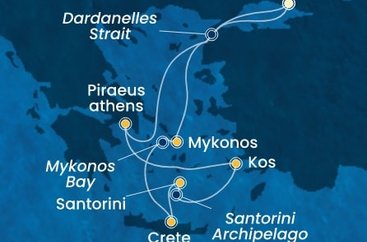
Turkey, Greece from Istanbul na lodi Costa Pacifica
| Ship: | Costa Pacifica |
|---|---|
| Route: | Turkey, Greece |
| Embarkation and disembarkation: | Istanbul, Turkey |
| Duration: | 7 nights |


