


Constanta / Romania
On the eastern coast of Romania lies Constanta on the shores of the Black Sea. The port, the largest in the Black Sea and one of the largest in all of Europe, is with its approximately 300,000 inhabitants the second largest city in Romania.
The history of Constanta dates back to 2,500 years ago: the settlement, known then as Tomis, was founded around 600 BC, making it the oldest continuously inhabited city in Romania. At the turn of the era, the area was seized by the Romans, and at the beginning of the 15th century, the city fell under the rule of the Ottoman Empire. In 1878, Constanta was returned to Romania and became its main naval port and an important trading center. During World War II, the port was damaged, but fortunately, the city itself remained relatively untouched.
In 1880, the foundation stone of the beautiful art deco casino was laid, which remains an important historical monument and a modern symbol of Constanta. A nice walk along the waterfront leads from it to the romantic Genoese Lighthouse.
The National History and Archaeology Museum offers a glimpse into the colorful past of the region from Rome to the Middle Ages. In front of it, on the main Ovid Square, stands a statue of the famous Roman poet, who was sent into exile here in the 8th century. In close proximity is a complex of large Roman mosaics from the 4th century.
The Great Mosque of Constanta was built as early as 1910 and boasts a 50-meter minaret, from which there are beautiful views of the city and the Black Sea coast. Christian architecture is represented by the magnificent Cathedral of Saints Peter and Paul, a Greek Orthodox church with admirable wall paintings.
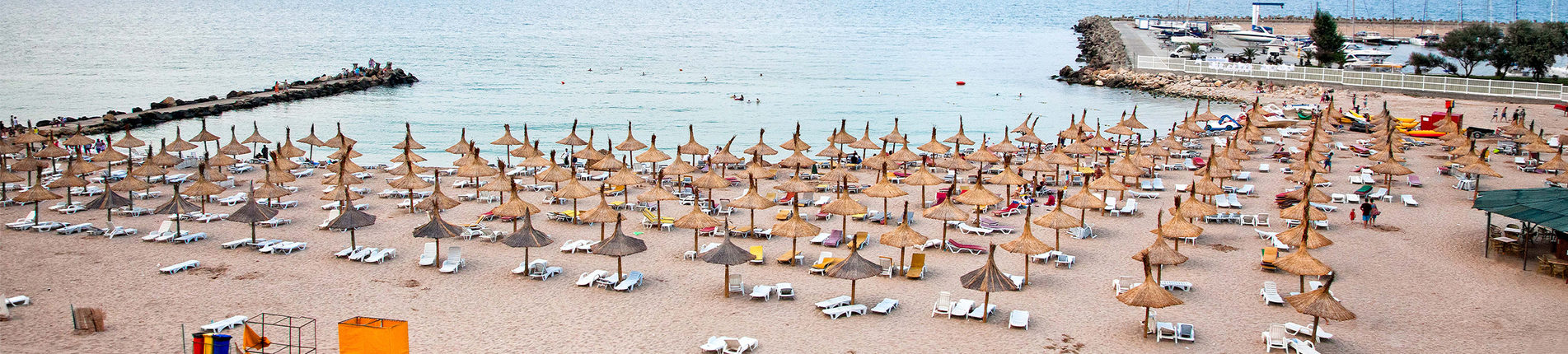
The coast, just a stone's throw from the city, is lined with nice beaches, including the 8-kilometer-long sandy Mamaia Beach with crystal-clear water. Constanta is known for its coastal lakes rich in minerals: the popular mud baths of Techirghiol on the shore of the lake of the same name offer visitors a range of healing treatments.
Constanta is the gateway to the beautiful Danube Delta, the second largest in Europe, listed as a UNESCO World Heritage Site for its rich ecosystem. About an hour's drive to the north lies Histria with the remains of an ancient Roman city, known as one of the oldest settlements in Romania.
Constanta offers countless restaurants serving cuisine from all corners of the world. Those who want to taste the typical Romanian cuisine should try the national dish sarmale, cabbage rolls filled with spiced pork and rice, fish soup, ciorba de peste, or pork stew in tomato or wine sauce, known here as tochitura.
Places worth seeing
National History and Archaeology Museum – Take a look into the fascinating history of one of Romania's oldest cities.
Roman Mosaics – Be enchanted by the beautiful Roman mosaics from the 4th century, discovered in the 1960s.
Folk Art Museum – View beautiful costumes and traditional folk clothing from various parts of Romania.
Mamaia Beach – Relax, swim, and sunbathe on the long sandy beach on the shores of the Black Sea just outside the city limits.
Constanta Casino – Admire the beautiful art deco casino from 1880 and enjoy a walk along the waterfront to the Genoese Lighthouse.
Mosque of Constanta – Enjoy breathtaking views from the 50-meter minaret of the mosque, built as early as 1910.
Danube Delta – Don't miss the beautiful nature of the unique ecosystem of the second largest delta in Europe, listed as a UNESCO World Heritage Site.
Bucharest – Visit the unique capital of the country, often nicknamed the "Paris of the Balkans."
Places worth seeing:

lavné kasino Constanta v Černém moři během zimy, v Rumunsku

Náměstí Ovidiu s Národním historickým a archeologickým muzeem ve Starém městě v Constantě při západu slunce

