

Samos / Greece
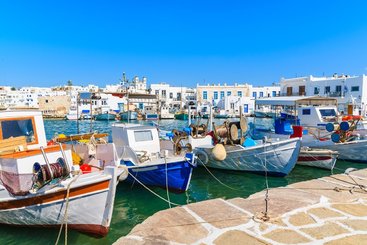
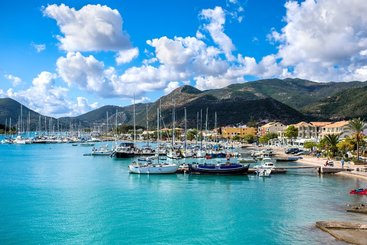
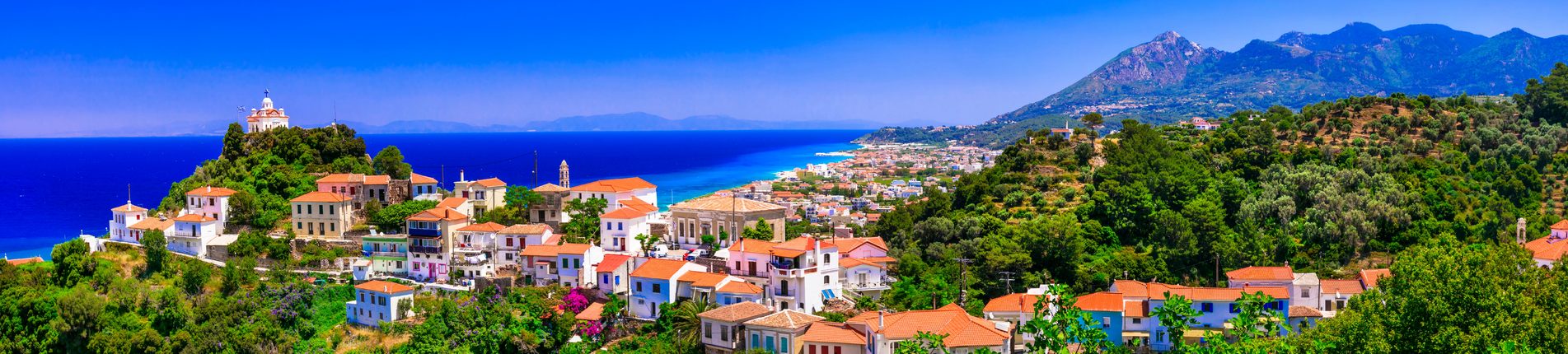
Samos is one of the most beautiful Greek islands in the waters of the Mediterranean Sea. It is located in the eastern part of the Aegean Sea, a few kilometers from the Turkish coast. Thanks to its rich history, picturesque ports, and beautiful nature, it is a sought-after destination for summer vacations and cruise trips. The island enchants visitors with its long beaches, green mountain slopes, traditional villages, and the friendly atmosphere typical of Greek islands.
What to taste in Samos?
The gastronomy of Samos is based on traditional Greek cuisine founded on quality olive oil, fresh vegetables, fish, seafood, and herbs. The island is especially famous for its sweet Muscat wine, which is among the most famous Greek wines. Local specialties include:
- Souvlaki and Gyros – grilled meat served with pita bread, vegetables, and tzatziki,
- Fresh fish and seafood – grilled fish, octopus, calamari, or shrimp prepared with olive oil and lemon,
- Greek Salad – traditional Greek salad with tomatoes, cucumber, olives, onion, and feta cheese,
- Dolmades – vine leaves stuffed with rice, herbs, or minced meat,
- Feta and local goat cheeses – a popular part of salads and hot dishes,
- Spanakopita and Tyropita – flaky pastries filled with spinach or cheese,
- Loukoumades – fried honey balls sprinkled with cinnamon and nuts,
- Baklava – traditional dessert made of layers of filo pastry, nuts, and honey syrup,
- Samos Muscat – world-famous sweet wine made from Muscat grapes grown on the island's mountain slopes,
- Ouzo and Tsipouro – traditional Greek spirits served as an aperitif or with local specialties.
Why will you love Samos?
- Beautiful beaches and diverse nature – Samos enchants with its long sandy and pebbly beaches, crystal-clear sea, and green landscape full of pine forests, vineyards, and mountain slopes. Thanks to this unique combination, it is one of the most picturesque Greek islands.
- Rich history and traditional Greek atmosphere – The island is the birthplace of the famous mathematician Pythagoras and boasts significant ancient monuments and picturesque port towns. Traditional villages, cozy taverns, and the hospitality of the locals give Samos an unmistakable charm.
- An ideal place for trips and relaxation – Samos offers excellent conditions for exploring historical monuments, mountain villages, and natural attractions. Thanks to boat trips, you can visit nearby islets or head to the Turkish coast, while those seeking peace can enjoy relaxation on one of the many beautiful beaches.
Practical tips:
- Official language: Greek, but in tourist areas, you can also communicate in English.
- Currency: Euro (EUR).
- Opening hours: These vary depending on the type of business and tourist season. Smaller shops are usually open from 9:00 to 13:30 and then again from 17:00 to 21:00. Supermarkets and larger stores are open without an afternoon break until the evening hours.
- Public transport: It is provided by bus connections and taxi services, or you can rent a car or scooter. Cruise ships dock in Vathy (Samos Town), from where visitors can reach the center within a few minutes on foot.
- Weather: Samos has a pleasant Mediterranean climate with mild winters, where average temperatures range around 12–15 °C, and warm to hot summers with typical daily temperatures around 28–32 °C. The main tourist season lasts from May to October, when ideal conditions for swimming and exploring the island prevail.
What to visit in Samos:
- Pythagorion – one of the most picturesque towns on the island, listed as a UNESCO World Heritage Site. It offers a historic harbor, narrow streets, taverns, and archaeological monuments, including the famous Eupalinos Tunnel.
- Heraion (Temple of Hera) – a significant archaeological site near Pythagorion, where the remains of one of the largest temples of ancient Greece dedicated to the goddess Hera were located.
- Kokkari – a popular seaside village with a traditional atmosphere, colorful houses, waterfront taverns, and beautiful beaches nearby, ideal for relaxation and swimming.
- Tsamadou Beach – one of the island's most famous beaches with crystal-clear water, surrounded by green hills and pine trees. It is one of the most popular places for swimming in Samos.
- Mount Kerkis – the highest mountain on the island with dramatic landscapes, hiking trails, and stunning views of the entire Aegean Sea. A popular destination for hiking and nature experiences.
The most interesting from the history of Samos:
The history of Samos dates back to antiquity, when the island was one of the important centers of the Aegean Sea. It reached its greatest prosperity in the 6th century BC, when it was ruled by tyrant Polycrates and Samos was one of the most powerful island states of ancient Greece. The island is also the birthplace of the famous mathematician and philosopher Pythagoras, after whom the town of Pythagorion is named. Significant traces were also left by ancient architecture, including the temple of the goddess Hera and the unique Eupalinos Tunnel, which is one of the most important technical works of antiquity. Due to its strategic location, Samos was an important trade and maritime center for centuries, and its significance persisted into later periods up to the present day, when it is a sought-after tourist destination with a rich cultural heritage.
Useful information
Port map:
Places worth seeing:

Pláž Lemonakia - jedna z nejkrásnějších pláží Řecka.

Pohled na starou vesnici Karlovasi.

Pláž Kerveli.


Getting to the port:
Cruise ships dock at the port in Vathy (Samos Town), which is located directly in the island's capital at the address: Vathy, 83100 Samos, Greece. The port directly connects to the coastal promenade, around which there are restaurants, cafes, and tourist services.