


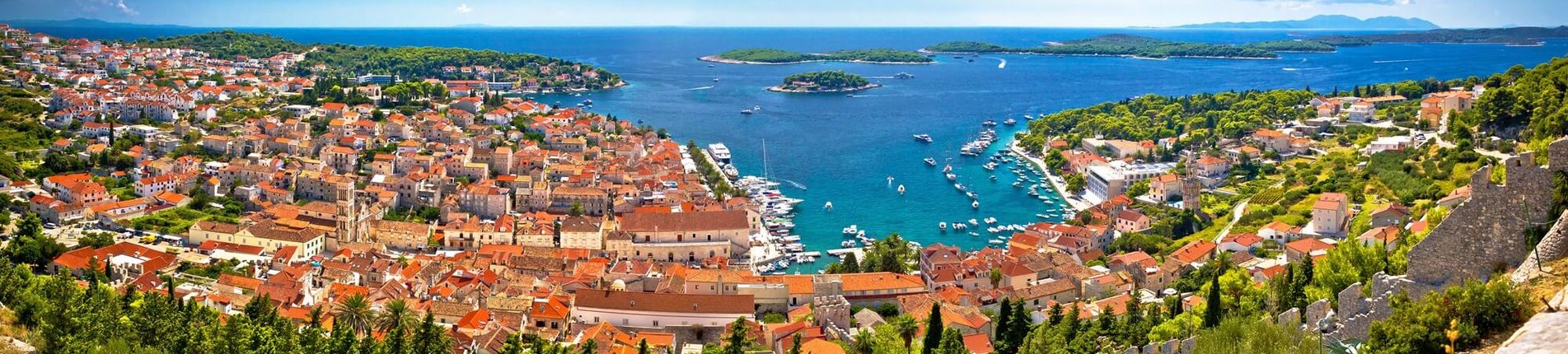
Hvar / Croatia
Off the Dalmatian coast of Croatia lies the island of Hvar in the Adriatic Sea. In its southwestern tip is its largest and eponymous town and port, which is a popular destination for cruise ships sailing the Mediterranean. Those who decide to venture beyond the city should visit the fragrant lavender fields or vineyards in the mountainous island's interior.
What to taste on Hvar?
The current Hvar cuisine successfully combines centuries-old gastronomic traditions with the possibilities of modern times – including new types of ingredients, spices, and other additives. Specialties include:
- Gregada – a dish made from at least four types of fish, served with bread from a bread oven,
- Lamb or veal prepared "under the bell," together with potatoes, and possibly vegetables,
- Hvar salty pie – filled with a mixture of fish, tomatoes, onions, olives, and other goodies,
- Octopus salad – boiled octopus with olive oil, onion, lemon, and herbs, often complemented with potatoes,
- Seafood risotto – in both black (from cuttlefish) and white versions with fresh seafood,
- Prošek – a delicate dessert wine made from carefully selected and sun-dried berries of several traditional local varieties.
- Starigrad paprenjak – a sweet reminiscent of gingerbread, made from flour, honey, milk, aromatic spices, and the aforementioned dessert wine Prošek.
Why will you love Hvar?
Thanks to its rich history, unique architecture, diverse cultural scene, and cuisine that combines tradition with modern flavors. All this in the backdrop of one of Europe's sunniest places.
Hvar is perceived as a luxury destination that attracts tourists from all over the world every year – including yachtsmen who take advantage of the modern and well-equipped marina.
Practical tips:
- Official language: Croatian, but English is also spoken in tourist areas.
- Currency: Euro (EUR)
- Opening hours: Vary depending on the type of store and the season. Regular business hours in cities are usually from 7:00 to 20:00, but shorter on Saturdays and mostly closed on Sundays.
- Public transport: Mainly provided by local buses and ferries/catamarans connecting Hvar with other parts of the island and the mainland (e.g., Split). Regular bus lines run between Hvar and other towns/villages on the island. Cruise ships cannot dock directly at the port, so visitors are transported by tenders directly to the city center.
- Weather: Hvar has a typical Mediterranean climate with mild and humid winters (averaging 10 – 15 °C) and hot sunny summers (exceeding 30 °C). The main tourist season is from May to September.
The most interesting from Hvar's history:
Hvar's history is characterized by extraordinary length and a wealth of events. As early as the 4th century BC, the island was settled by the ancient Greeks, and two centuries later by the Romans. From the 13th to the 18th century, Hvar became a significant trade and cultural center of the Adriatic Sea as part of the Venetian Republic, which established an important naval base here. At the beginning of the 19th century, the island came under the administration of the Habsburg Monarchy, and already in the second half of this century, the town of Hvar began to profile itself as a popular tourist destination – a status it retains to this day.
Useful information
Port map:
Places worth seeing:

Pevnost Fortica (Španjola) – Vystoupejte k pevnosti z druhé poloviny 16. století a kochejte se odsud nádhernými výhledy na moře i Hvar. V roce 1579 byla pevnost značně poškozena při výbuchu skladu střelného prachu, který byl způsoben úderem blesku, a opravena byla až počátkem 17. století. V současnosti se zde nachází sbírky z antiky a středověku.

Františkánský klášter – Nenechte si ujít starý klášter s kostelem z 15. století, zasazený do nádherných zahrad na pobřeží tyrkysového moře. Nachází se zde elegantní zvonice a krásně zdobené interiéry i exteriéry. Prohlédněte si také rozměrné plátno se známým motivem „Poslední večeře“.

Dubovica – Relaxujte a opalujte se na hezké pláži, jen co by kamenem dohodil od města.


Getting to the port:
Cruise ships dock at Port of Hvar at the address: Nautički centar Hvar, 7, Riva, 21450, Hvar, Croatia.
Cruises to Hvar:
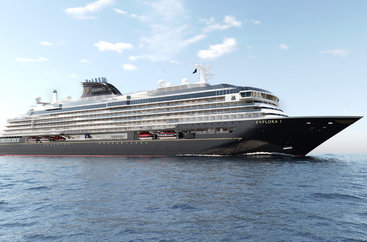
Italy, Slovenia, Croatia, Greece from Fusina na lodi Explora I
| Ship: | Explora I |
|---|---|
| Route: | Italy, Slovenia, Croatia, Greece |
| Embarkation: | Fusina, Italy |
| Disembarkation: | Piraeus (Athens), Greece |
| Duration: | 7 nights |
Italy, Slovenia, Croatia, Greece, Montenegro from Fusina na lodi Explora I
| Ship: | Explora I |
|---|---|
| Route: | Italy, Slovenia, Croatia, Greece, Montenegro |
| Embarkation and disembarkation: | Fusina, Italy |
| Duration: | 14 nights |