

Harwich / United Kingdom
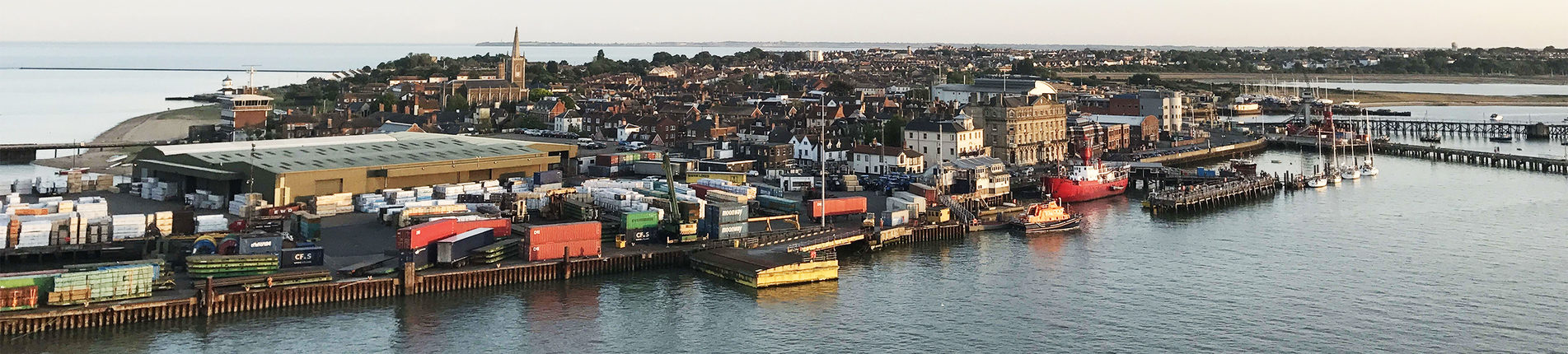
Harwich, located in the county of Essex, is one of the important English North Sea ports. The town was established in a natural bay on the rivers Stour and Orwell, and due to its ideal location and safety, it became one of the main bases of the British Navy in 1657. It continues to serve as an important port
today and is also a gateway to London for many tourists from cruise ships.
London, the capital of the United Kingdom, with its approximately 9 million inhabitants, is the largest metropolis in Western Europe. The vibrant city on the River Thames offers countless monuments, museums, theaters, and restaurants. It is also an important global financial and cultural center, contributed to by a diverse mix of nations from all corners of the world. London offers so many attractions that you need at least a few days to explore them. Tower Bridge, Buckingham Palace, Westminster Abbey, Big Ben, the British Museum, and many others are world tourism landmarks, making London a city that everyone should definitely visit at least once.
The first permanent settlement in the bend of the River Thames was probably founded by the Romans in 43 AD. It was named Londinium, which was shortened to the current name. After several Celtic attacks, the settlement was surrounded by massive walls and became the capital of Roman Britain. It also laid the foundation for the current City district, which soon became a significant trading center. The bustling trade did not stop even after the fall of the Western Roman Empire in the 5th century. Sometime in the 7th century, the Anglo-Saxons founded a new settlement called Lundenwic about 1 km upstream – where the Westminster district is today. After centuries of battles between the Anglo-Saxons and the Vikings, in 1066, the Norman ruler William the Conqueror seized London and all of England. William made Westminster the seat of royal and state power, leaving the City district to the merchants. Although the two original towns slowly merged into one, this traditional division has persisted to this day. London continued to grow thanks to international trade. Under the Tudors, it became one of the largest and most important cities in Europe, significantly aided by new trade routes to America, Asia, and Africa. With the advent of the industrial revolution and accumulated wealth from the colonies, Great Britain and London took the position of world leader in the 19th century. This was reflected in the grand urban development and the enormous population growth. After the collapse of the British colonial empire after World War II, England lost its empire and important sources of income, but London remained in all respects one of the most important cities in the world.
Places worth seeing:
- Tower of London
- Westminster Palace
- Buckingham Palace
- Tower Bridge
- Piccadilly Circus
Enjoy local specialties…
Fish and chips – fried cod and chips
Pie and mash – meat pie with mashed potatoes and gravy
Jacket potato – baked potato with a crispy skin and various fillings
Carrot pie – carrot cake
Full English breakfast – English breakfast – eggs, bacon, mushrooms, beans, sausages, tomato, potatoes, and toast
Cheeses – cheddar, Red Leicester, Cornish Yarg, …
Places worth seeing:

Pobřeží Harwichu, Velká Británie

Pohled na přístav Harwich, Velká Británie