

Malmö (Copenhagen) / Sweden
In the south of Sweden, by the Oresund Strait, lies Malmö, the third largest city in the country and a significant center of the Skane region. Historical alleys are complemented by modern architecture, green parks, and a diverse range of restaurants reflecting the cultural diversity of this area. Visitors will appreciate not only the picturesque Lilla Torg square and the iconic Turning Torso skyscraper, but also the proximity to Danish Copenhagen, allowing them to explore two Scandinavian cities in one trip.
What to taste in Malmö?
The gastronomy of Malmö is based on the traditions of southern Sweden but also reflects international influences typical for this culturally diverse city. Alongside regional specialties, there is popular street food and cafes where the traditional Swedish custom called fika is practiced.
- Aggakaka – a hearty Skane egg pancake traditionally served with fried pork and lingonberries.
- Spettekaka – a delicate conical dessert made from eggs, sugar, and potato starch, typical for the southern Swedish region of Skane.
- Pickled herring – a popular component of Swedish cuisine, prepared in various marinades and often served with potatoes or fresh bread.
- Falafel – golden-fried chickpea balls with vegetables and sauce, a favorite in local street gastronomy.
- Kanelbulle – a fragrant cinnamon roll that Swedes enjoy with coffee during the traditional break called fika.
Why will you love Malmö?
- Historic center with a unique atmosphere – Lilla Torg square is lined with colorful half-timbered houses, cozy cafes, and restaurants. Just a short distance away stands the Gothic Sankt Petri Kyrka church, reminiscent of the city's medieval roots.
- Modern architecture and coastal districts – The dominant feature of Malmö is the Turning Torso skyscraper, which stands out with its unusual shape from the surrounding buildings. In the Västra Hamnen district, modern buildings, promenades, and views of the Oresund Bridge follow.
- Relaxation by the sea – The popular Ribersborg beach offers space for relaxation and walks along the coast. The nearby Ribersborgs Kallbadhus sea baths attract visitors with traditional sauna and sea bathing, even during the colder months.
- Trip to Danish Copenhagen – Thanks to the Oresund Bridge, Malmö is an excellent starting point for exploring neighboring Denmark. You can reach Copenhagen by train in about 40 minutes, allowing you to combine two cities with different architecture and atmosphere in one stay.
Practical tips:
- Official language: Swedish. In tourist areas, shops, and restaurants, English is commonly spoken.
- Currency: Swedish krona (SEK).
- Opening hours: Most shops in Malmö are open from Monday to Saturday, with shopping centers having longer opening hours. Museums, restaurants, and other establishments may have varying opening hours depending on the season.
- Public transport: Malmö can be navigated primarily by buses and trains. The city center is easily accessible on foot, and cycling is also a popular mode of transport. The railway connection over the Oresund Bridge allows travel to Danish Copenhagen.
- Weather: Malmö has a mild maritime climate with variable weather. In summer, daily temperatures usually range from 18–23 °C, while winters are cold and wet, with temperatures often around freezing. It's advisable to be prepared for wind and the possibility of rain throughout the year.
The most interesting from Malmö's history:
Malmö's history dates back to the Middle Ages when it became an important trading center due to its advantageous location by the Oresund Strait, known primarily for herring trade. At that time, it belonged to Denmark, and its Danish past is still evident in some historical monuments and architecture. It came under Swedish rule in 1658 after the Treaty of Roskilde. In the 19th century, industrial development and the railway brought further prosperity to the city, but over time Malmö transformed from an industrial port into a modern center of culture, education, and technology. A new chapter in its history was opened in 2000 with the opening of the Oresund Bridge, which connected Malmö with Copenhagen and further strengthened ties between Sweden and Denmark.
Useful information
Port map:
Places worth seeing:

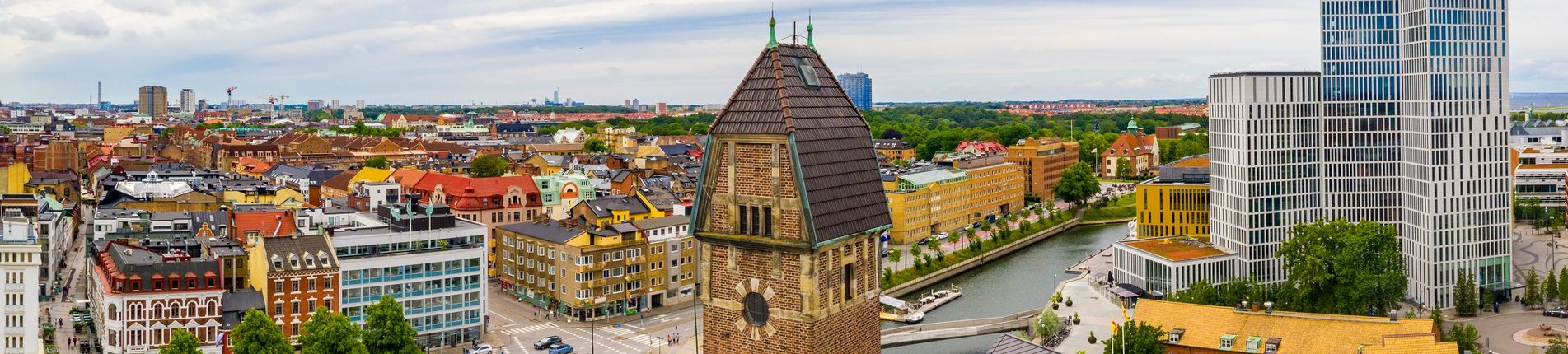
Panorama Malmö s historickou radnicí, moderními výškovými budovami a pěším mostem přes městský kanál.

Náměstí Stortorget s historickou radnicí a malebnými budovami v centru Malmö.

Náměstí Lilla Torg s historickými hrázděnými domy a venkovními posezeními kaváren v centru Malmö.


Getting to the port:
Cruise ships dock at the Port of Malmö - Cruise Terminal, located at Grimsbygatan 18, 211 20 Malmö. It is approximately 1 km to the city center, which is about a 10–15 minute walk.