


Riga / Latvia
Riga, the capital of Latvia, will enchant you with its unique combination of Art Nouveau architecture, a historic center, and a lively atmosphere on the banks of the Daugava River. This Baltic city combines a rich past with a modern rhythm of life and offers a diverse range of experiences for every visitor.
What to taste in Riga?
The local cuisine combines traditional ingredients with simple yet distinctive flavors inspired by Nordic and Eastern European gastronomy.
- Pelmeni – small dumplings filled with meat, served with sour cream or butter.
- Grey peas with bacon – a hearty dish made from grey peas and bacon, which is among the national specialties.
- Rye bread – dark rye bread with a characteristic taste, often served as a side dish.
- Cold beet soup – a refreshing cold soup made from beetroot, ideal for warmer days.
- Sklandrausis – a traditional pie with carrots and potatoes, typical of Latvian cuisine.
- Rasol – a potato salad with meat and vegetables, popular on festive occasions.
- Karbonade – a juicy pork schnitzel in a light batter, served with potatoes or salad.
Why will you love Riga?
- Art Nouveau gem of the north – Riga is renowned for having one of the richest collections of Art Nouveau architecture in Europe, which you can admire, for example, on Alberta iela. The historic center Old Town Riga is listed as a UNESCO World Heritage Site and captivates with its atmosphere.
- Landmarks within reach – among the most significant landmarks are the Riga Cathedral or the iconic House of the Blackheads, which reflect the city's rich history.
- Pleasant atmosphere by the river – the banks of the Daugava River invite you for walks, relaxation, and exploring local cafes and restaurants.
Practical tips:
- Official language: Latvian, but you can commonly communicate in English and often also in Russian.
- Currency: Euro (EUR)
- Opening hours: Shops are usually open from around 10:00 to 20:00, shopping centers longer. Attractions are generally accessible between 9:00 and 18:00. Restaurants operate from noon to evening hours.
- Public transport: The city has a dense network of trams, buses, and trolleybuses. A curiosity is the historic trams, which offer a stylish way to explore the city.
- Weather: Riga has a mild continental climate – summers are pleasant (20–25 °C), winters are cold. The best time to visit is from May to September.
The most interesting from Riga's history:
Riga was founded at the beginning of the 13th century as a strategic trading port and soon became part of the Hanseatic League, which connected major cities in Northern Europe. Thanks to its location on the Daugava River, the city quickly became an important crossroads between east and west, bringing wealth and cultural diversity. Over the centuries, Riga came under the rule of the Livonian Order, Sweden, and the Russian Empire, which is reflected in the architecture, culture, and daily life of its inhabitants. In the 20th century, the city witnessed dramatic changes – wars, occupation, and Soviet rule marked its history until Latvia regained its independence in 1991. Today, Riga acts as a modern metropolis that proudly preserves its historical heritage and offers visitors a unique insight into both the past and present.
Useful information
Port map:
Places worth seeing:

Radniční náměstí v Rize okouzluje historickou atmosférou s dominantním Domem černých hlav, symbolem bohaté obchodní minulosti města. V pozadí se tyčí kostel svatého Petra, jehož gotická věž nabízí impozantní panoramata Starého Města.

Domy Tři bratři v Rize patří k nejstarším obytným stavbám ve městě a představují vývoj architektury od středověku po novověk. Tento soubor historických domů je oblíbenou památkou a ukázkou tradiční městské zástavby v Rize.

Rižský dóm je impozantní katedrála v srdci Starého Města Rigy, známá svou goticko-románskou architekturou a historickým varhanním koncertem. Patří k nejvýznamnějším náboženským a kulturním památkám Lotyšska a je oblíbeným cílem turistů.


Getting to the port:
Cruise ships dock directly at the Port of Riga near the historic center. You can comfortably walk to the city – the journey takes approximately 15 to 20 minutes along the Daugava River. Shuttle buses, taxis, and public transport are also available, making the transfer easy and quick.
Cruises to Riga:
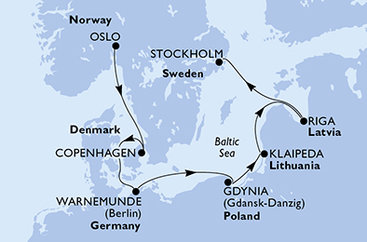
Norway, Denmark, Germany, Poland, Lithuania, Latvia, Sweden from Oslo na lodi MSC Magnifica
| Ship: | MSC Magnifica |
|---|---|
| Route: | Norway, Denmark, Germany, Poland, Lithuania, Latvia, Sweden |
| Embarkation: | Oslo, Norway |
| Disembarkation: | Stockholm, Sweden |
| Duration: | 6 nights |
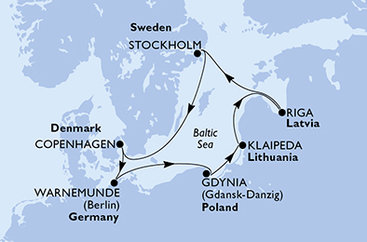
Denmark, Germany, Poland, Lithuania, Latvia, Sweden from Copenhagen na lodi MSC Magnifica
| Ship: | MSC Magnifica |
|---|---|
| Route: | Denmark, Germany, Poland, Lithuania, Latvia, Sweden |
| Embarkation and disembarkation: | Copenhagen, Denmark |
| Duration: | 7 nights |

Finland, Estonia, Latvia, Lithuania, Sweden, Germany, Denmark from Helsinki na lodi Norwegian Jewel
| Ship: | Norwegian Jewel |
|---|---|
| Route: | Finland, Estonia, Latvia, Lithuania, Sweden, Germany, Denmark |
| Embarkation: | Helsinki, Finland |
| Disembarkation: | Copenhagen, Denmark |
| Duration: | 8 nights |