


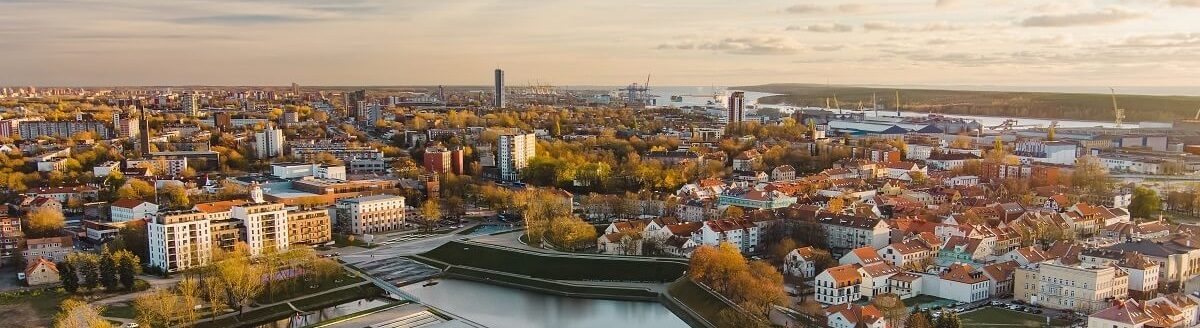
Klaipeda / Lithuania
On the western coast of Lithuania lies Klaipeda, the largest Lithuanian port city and an important gateway to the Baltic Sea. The compact center is characterized by historic alleys, half-timbered houses, and the banks of the Dane River, which together recall the city's long maritime tradition. History enthusiasts, seaside atmosphere lovers, and those who enjoy peaceful city walks will find something to enjoy here.
What to taste in Klaipeda?
In Klaipeda, you can taste traditional Lithuanian dishes, which are primarily based on potatoes, meat, and dairy products. Thanks to its coastal location, fish and other specialties typical of western Lithuania also appear on local menus.
- Cepelinai – large potato dumplings most often filled with minced meat, served with sour cream and bacon. They are among the most famous Lithuanian dishes.
- Kugelis – a baked dish made from grated potatoes, often supplemented with onions and bacon. It is a popular classic of Lithuanian cuisine.
- Šaltibarščiai – a cold beetroot soup with kefir, cucumber, and dill. It is characterized by its distinctive pink color and is most often served with boiled potatoes.
- Smoked fish – various types of fish prepared by traditional smoking are among the favorite delicacies of the Lithuanian coast.
- Cheese fingers – crispy fried pieces of cheese served with sauce, which are among the specialties directly associated with Klaipeda.
- Gira – a traditional Lithuanian fermented bread drink with a slightly sweet taste and gentle fizz.
Why will you love Klaipeda?
- Port atmosphere and historic center – Klaipeda's historic center is full of interesting places, including Theater Square, half-timbered houses, the Danė River, and the famous sailing ship Meridianas. The combination of historic buildings with water surfaces and the port gives the center a pleasant atmosphere and reminds of the city's significance as an important port.
- A city full of sculptures and stories – Klaipeda is enlivened by dozens of smaller sculptures and interesting details hidden in the streets. The most famous include the Black Ghost, Cat with a Gentleman’s Face, or the statue of Ann from Tharau on Theater Square. These small details remind of local legends and give the city its unique character.
- Curonian Spit – just a short ferry ride leads to Smiltyne and further to one of the most interesting corners of the Lithuanian coast. The Curonian Spit, listed as a UNESCO World Heritage Site, is known for its high sand dunes, pine forests, and long beaches. It is an ideal choice for those who want to combine city sights with nature during their visit to Klaipeda.
Practical tips:
- Official language: Lithuanian. In tourist areas and restaurants, you can usually communicate in English as well.
- Currency: Euro (EUR).
- Opening hours: attractions, museums, and galleries are usually open during daytime hours, but specific times may vary depending on the location and season. Shops are typically open from morning to evening, while restaurants and cafes usually stay open longer.
- Public transport: you can comfortably get around Klaipeda mainly by city buses. For visitors, the ferry to Smiltyne, which connects the city with the Curonian Spit, is particularly interesting.
- Weather: Klaipeda has a mild maritime climate with cooler summers and mild winters. The ideal time to visit is from late spring to early autumn, when summer temperatures usually hover around 20 °C. The weather can be changeable, so it's good to be prepared for wind and occasional showers.
The most interesting from Klaipeda's history:
The history of Klaipeda dates back to 1252, when the Teutonic Knights founded the Memelburg Castle here, laying the foundation for the later city. For centuries, Klaipeda was known as Memel, and its development was significantly influenced by the German environment and the growing importance of the port. After World War I, the area came under French administration, and in 1923 it joined Lithuania. In 1939, Klaipeda was taken over by Germany again, and at the end of World War II, the city suffered significant damage and lost a large part of its original population. After the war, it became part of the Soviet Union and was finally returned to Lithuania after the restoration of its independence in 1990. Today, Klaipeda is the most important Lithuanian port and a significant center of the western part of the country.
Useful information
Port map:
Places worth seeing:

Lodě a čluny na řece Danė v historickém centru Klaipedy s typickou zástavbou starého města a nábřežím.

Činoherní divadlo v historickém centru Klaipedy je významnou kulturní stavbou města.

Historická plachetnice Meridianas kotvící na řece Danė v centru Klaipedy.


Getting to the port:
Cruise ships dock at the Klaipėda Cruise Ship Terminal, which is part of the Port of Klaipeda and is located near the historic center. From the port pier, Theatre Square is approximately a 10–15 minute walk away, making the city center easily accessible without the need for transportation. Taxis and other local transport options are also available around the port.
Cruises to Klaipeda:
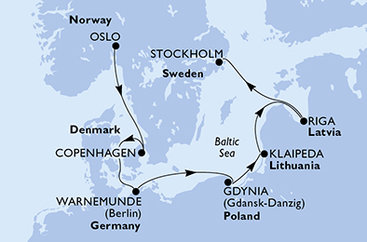
Norway, Denmark, Germany, Poland, Lithuania, Latvia, Sweden from Oslo na lodi MSC Magnifica
| Ship: | MSC Magnifica |
|---|---|
| Route: | Norway, Denmark, Germany, Poland, Lithuania, Latvia, Sweden |
| Embarkation: | Oslo, Norway |
| Disembarkation: | Stockholm, Sweden |
| Duration: | 6 nights |
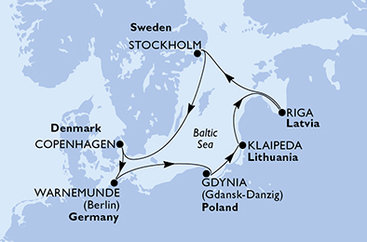
Denmark, Germany, Poland, Lithuania, Latvia, Sweden from Copenhagen na lodi MSC Magnifica
| Ship: | MSC Magnifica |
|---|---|
| Route: | Denmark, Germany, Poland, Lithuania, Latvia, Sweden |
| Embarkation and disembarkation: | Copenhagen, Denmark |
| Duration: | 7 nights |

Finland, Estonia, Latvia, Lithuania, Sweden, Germany, Denmark from Helsinki na lodi Norwegian Jewel
| Ship: | Norwegian Jewel |
|---|---|
| Route: | Finland, Estonia, Latvia, Lithuania, Sweden, Germany, Denmark |
| Embarkation: | Helsinki, Finland |
| Disembarkation: | Copenhagen, Denmark |
| Duration: | 8 nights |