

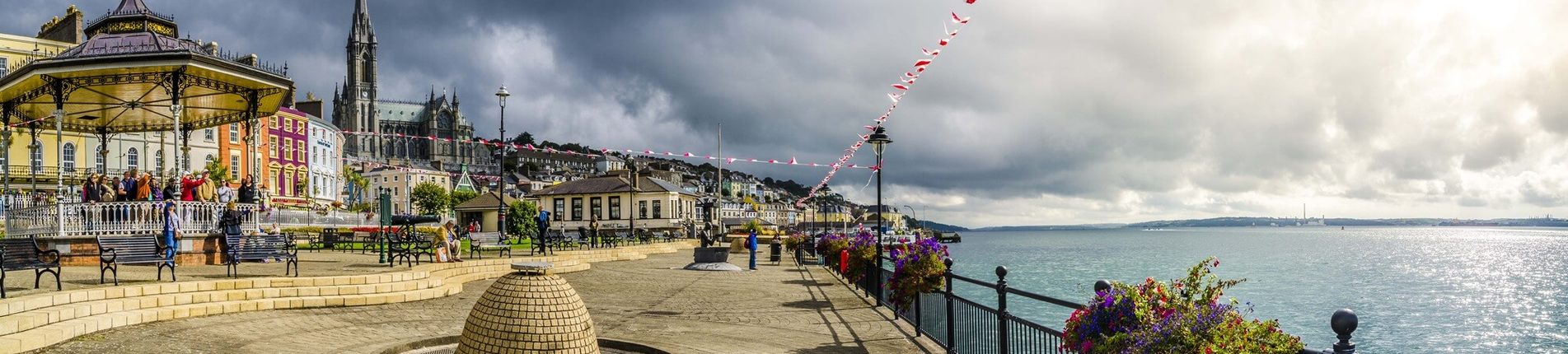
Cobh (Cork) / Ireland
On the southern coast of Ireland, at the mouth of the River Lee, lies Cork. The second largest city in Ireland, with approximately 120,000 inhabitants, is a significant cultural, university, and historical center of the region and one of the important cities of Northern Europe. It offers rich gastronomy, picturesque streets, and impressive landmarks and is among the most popular tourist destinations in this part of the country.
Not far from Cork is the picturesque port town of Cobh with approximately 14,000 inhabitants. It is situated on the slopes of Great Island in one of the largest natural harbors in the world and is famous as the last stop of the Titanic before its fateful voyage. Cobh serves as the gateway to Cork, about 20 km away.
What to taste in Cork?
Local gastronomy is based on fresh, local ingredients, especially fish and seafood. A great place to taste them is the English Market with a wide range of regional products. In addition to traditional dishes like boiled pig's trotters (crubeens) or animal stomachs (tripe), it is also worth trying:
- Fish and chips – fried fish with chips, a classic of Irish coastal towns,
- Seafood chowder – a thick creamy soup made from fish and seafood,
- Irish stew – a traditional stew made from lamb or beef with potatoes and vegetables,
- Boxty – potato pancakes or fritters typical of Irish cuisine,
- Black pudding – dark blood pudding often served for breakfast,
- Soda bread – traditional Irish bread made without yeast,
- Irish beer – such as stout or ale, which perfectly complements local dishes.
Why will you love Cork and Cobh?
You will love the cities of Cork and Cobh for their unique combination of history, seaside atmosphere, and vibrant Irish culture. While Cork attracts with its bustling center full of markets, cafes, and cultural events, Cobh enchants with its calmer atmosphere, colorful houses, and views of one of the largest natural harbors in the world. Both cities are connected by their proximity to the ocean, offering opportunities for walks along the coast, boat trips, and exploring the surrounding nature. Thanks to the mild climate, you can enjoy a relaxed pace, great food, and authentic Irish hospitality all year round.
Practical tips:
- Official language: English.
- Currency: Euro (EUR).
- Opening hours: Shops usually open around 09:00–10:00 and close between 17:00–18:00. Supermarkets often stay open longer (approx. 07:00–21:00). On Saturdays, opening hours are shorter, and on Sundays, most shops are closed, except for some supermarkets and smaller stores.
- Public transport: Cork and Cobh are connected by regional buses. In Cork, city transport is mainly provided by buses, including connections from the center to the port, from where it is possible to reach the city on foot or by taxi. In Cobh, the center is accessible directly from the port – the walk takes just a few minutes. A train runs to the center of Cork, with the station located right by the port.
- Weather: The climate is mild oceanic, with summers around 18–20°C and winters around 2–7°C. The weather is changeable, often rainy and windy.
What to visit:
Cork
- St. Fin Barre's Cathedral – admire the beautiful Protestant cathedral, built in the second half of the 19th century in the Gothic Revival style, with three towers, magnificent sculptural decoration, and stained glass windows.
- Cork County Hall – the town hall and the second tallest building in Cork, from whose observation terrace there are beautiful views of the city.
- St. Anne's Church in Shandon – the tower of this mid-18th-century church is a symbol of Cork. It measures 36.5 meters and, thanks to the combination of red sandstone and white limestone, dominates the northern part of the city. The tower houses eight bells that visitors can ring themselves.
- Red Abbey – the Augustinian Red Abbey was built in the 14th century from reddish sandstone, but today only the central bell tower remains.
- Elizabeth Fort – this fort was built in the 17th century and served various purposes – as a military barracks or prison. Today, during a guided tour, visitors can learn more about the history of Cork.
- St Patrick's Street – stroll along the main pedestrian street of the city, nicknamed "Pana" by locals and awarded as the best shopping street in Ireland.
- Crawford Art Gallery – don't miss the exhibitions of traditional and contemporary art in the popular art gallery, housed in a beautiful 18th-century building.
Cobh
- St. Colman's Cathedral – the dominant cathedral towering over the town and the main symbol of Cobh, which, in addition to impressive architecture, offers beautiful views of the surroundings.
- Titanic Experience Cobh – commemorates the last stop of the Titanic and offers an interesting and authentic exhibition dedicated to its passengers and the history of the voyage.
- Deck of Cards Houses – are iconic colorful houses built on a slope, which are among the most photographed places in the town.
- Cobh Promenade – a pleasant coastal promenade ideal for walks with views of the harbor and arriving ships.
- Spike Island – an island with a rich history, which served as a fort and prison, sometimes nicknamed "Ireland's Alcatraz," and today is accessible as part of organized boat tours.
The most interesting from the history of Cork and Cobh:
The city of Cork was founded by Viking settlers around 915 on the site of an older monastery. In the Middle Ages, it developed as an important trading port and was entirely fortified. In the 12th century, Cork came under the rule of the Normans and gradually became one of the main cities of English administration in Ireland. Due to its location and port, it played a significant role in trade, especially with wine and butter. From the 19th century, it was strongly nationalistic, and during the Irish War of Independence, its center was burned in 1920, leading to the subsequent reconstruction of the city. In the 20th century, Cork gradually transformed into a modern university and cultural center, which still retains its unique identity and pride in its turbulent past.
The town of Cobh, formerly known as "Queenstown", played a significant role in Irish emigration in the 19th and 20th centuries, when millions of people departed from here seeking a new life in America. In 1912, Cobh was indelibly marked in history as the last port where the Titanic docked before its first and only voyage. During World War I, the port served as an important naval base, and even today, the town retains a strong maritime tradition and a unique atmosphere associated with the history of departures and returns.
Useful information
Port map:
Places worth seeing:

Večerní atmosféra Corku na březích řeky Lee.

Barevné domy „Deck of Cards“ v Cobhu.

Přístav v Cobhu při příjezdu zaoceánského parníku.


Getting to the port:
Cruise ships dock at the port in Cobh (Port of Cork) at the address: Ringmeen, Cobh, Co. Cork, Ireland. The entire Cork Harbour is one of the largest and safest in the world and is capable of accommodating even the largest ships.
Cruises to Cobh (Cork):
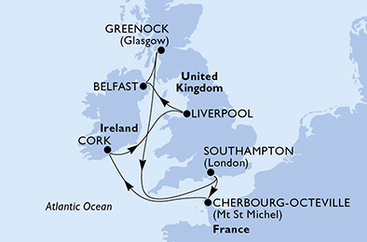
United Kingdom, France, Ireland from Southampton na lodi MSC Meraviglia
| Ship: | MSC Meraviglia |
|---|---|
| Route: | United Kingdom, France, Ireland |
| Embarkation and disembarkation: | Southampton, United Kingdom |
| Duration: | 7 nights |
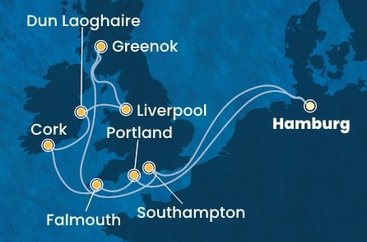
Germany, United Kingdom, Ireland from Hamburg na lodi Costa Favolosa
| Ship: | Costa Favolosa |
|---|---|
| Route: | Germany, United Kingdom, Ireland |
| Embarkation and disembarkation: | Hamburg, Germany |
| Duration: | 11 nights |