


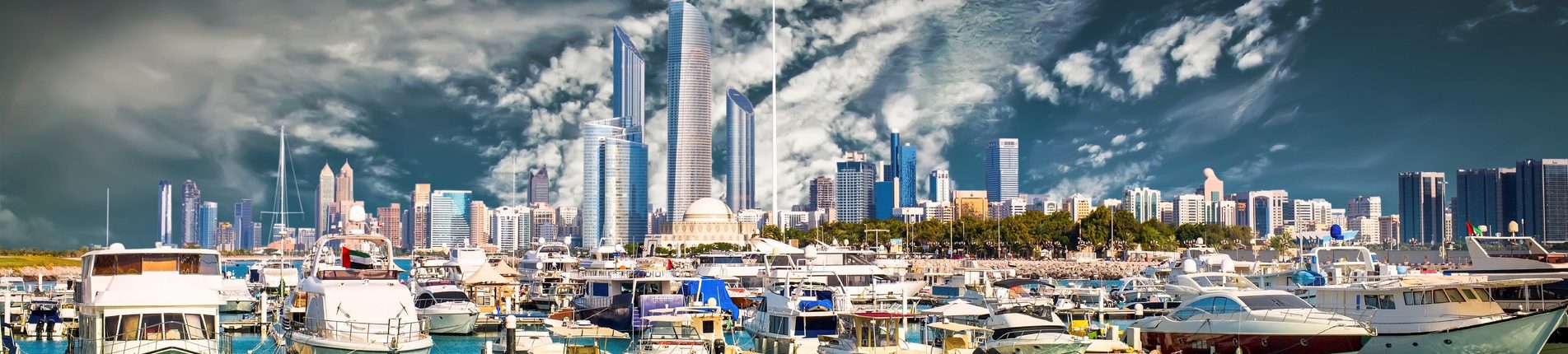
Abu Dhabi / United Arab Emirates
Abu Dhabi, the capital of the United Arab Emirates, is a modern metropolis spread across islands and the coast of the Persian Gulf. Just a few decades ago, it was a small settlement primarily associated with pearl diving and trade, but today it is one of the wealthiest and fastest-growing cities in the region. The blend of Arabian traditions, modern architecture, sandy beaches, and a year-round warm climate makes Abu Dhabi one of the most popular stops offered by cruises on the Red and Arabian Seas.
What to taste in Abu Dhabi?
The cuisine of Abu Dhabi is based on traditional Emirati gastronomy, which combines Arabian, Persian, and Indian influences, distinctive spices, rice, meat, fish, and dates.
- Al machboos – one of the most famous Emirati dishes, made from spiced rice with chicken, lamb, or fish.
- Harees – a traditional dish made from wheat and slowly cooked meat, seasoned with spices and clarified butter.
- Thareed – stewed meat with vegetables and spices served with thin Arabic bread.
- Camel meat – traditional dishes, burgers, steaks
- Luqaimat – small fried dough balls, crispy on the outside and soft inside, traditionally drizzled with date syrup.
- Dates – an integral part of Emirati culture and hospitality, often served together with Arabic coffee.
- Arabic coffee (gahwa) – light coffee flavored with cardamom, which is a traditional symbol of hospitality in the Emirates.
Why will you love Abu Dhabi?
- Magnificent architecture – Sheikh Zayed Grand Mosque, Qasr Al Watan, modern skyscrapers, and cultural buildings on Saadiyat Island are among the most impressive places in the United Arab Emirates.
- Arab culture and the modern world – traditional Emirati heritage naturally blends here with contemporary architecture, art, and a cosmopolitan lifestyle.
- Sea, islands, and desert – sandy beaches of the Persian Gulf, dozens of islands, and desert landscapes around the city offer a completely different world just a few kilometers from the modern metropolis.
Practical tips:
- Official language: Arabic, but due to the international character of the city, you can communicate almost everywhere in English without any problems.
- Currency: United Arab Emirates dirham (AED)
- Opening hours: shopping centers are usually open from around 10:00 to 22:00, often longer on weekends. The opening hours of landmarks and tourist attractions vary and may be adjusted during Ramadan.
- Public transport: air-conditioned buses run throughout the city, and taxis are also widely available. Abu Dhabi is vast, and individual landmarks are relatively far apart, so it is not a city suitable for all-day exploration on foot alone. However, the Corniche promenade and some central areas are very pleasant for walking.
- Weather: Abu Dhabi has a hot desert climate with very warm summers, where temperatures often exceed 40 °C, and pleasant winters. The most pleasant period for a visit is approximately from November to March, when daytime temperatures usually range around 20–30 °C.
The most interesting from the history of Abu Dhabi:
The area of today's Abu Dhabi has been inhabited for thousands of years, but the city itself began to form in the 18th century, when the Bani Yas tribe settled here. According to tradition, its members were led to the coast by a gazelle, which guided them to a source of fresh water – hence the name Abu Dhabi, often interpreted as "father of the gazelle." The city gradually became the seat of the ruling Al Nahyan dynasty, and its economy was long based primarily on pearl diving, fishing, and trade. A significant change came with the discovery of oil in the 20th century and especially its commercial extraction from the early 1960s, which enabled the extraordinarily rapid modernization of the city. A key figure in this transformation was Sheikh Zayed bin Sultan Al Nahyan, who in 1971 became the first president of the newly formed United Arab Emirates. Under his leadership, Abu Dhabi transformed into a modern capital with extensive infrastructure, wide boulevards, parks, and new residential districts. Today, Abu Dhabi is the political and cultural center of the country, combining traditional Arabian heritage with modern architecture, world-class art, and an ambitious vision for the future.
Useful information
Port map:
Places worth seeing:

Velká mešita šejka Zayeda patří k nejvýznamnějším symbolům Abú Dhabí. Monumentální stavba z bílého mramoru zaujme desítkami kopulí, štíhlými minarety a bohatě zdobenými interiéry.

Ostrovy kolem Abú Dhabí tvoří charakteristickou součást pobřeží Perského zálivu a nabízejí písečné pláže, mangrovové porosty i moderní zástavbu. K nejznámějším patří Saadiyat, Yas a Al Maryah, z nichž každý má zcela odlišný charakter.

Etihad Towers je komplex pěti moderních mrakodrapů, které patří k nejvýraznějším dominantám panoramatu Abú Dhabí. Z vyhlídkové plošiny ve výšce přibližně 300 metrů se otevírají působivé výhledy na město, Corniche a Perský záliv.


Getting to the port:
Cruise ships in Abu Dhabi dock at the modern Abu Dhabi Cruise Terminal, located at Zayed Port (Mina Zayed) near the city center. The terminal offers restaurants, shops, currency exchange, and other services for passengers, and its location makes it a good starting point for exploring the main attractions of the metropolis. The most convenient way to get to the center and tourist attractions is by taxi or public transport.
Cruises to Abu Dhabi:
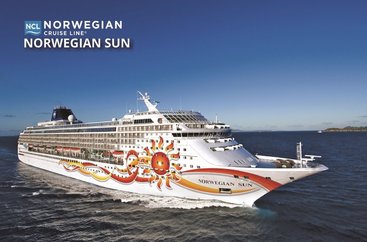
Greece, Cyprus, Egypt, Jordan, Saudi Arabia, Oman, Qatar, United Arab Emirates from Piraeus (Athens) na lodi Norwegian Sun
| Ship: | Norwegian Sun |
|---|---|
| Route: | Greece, Cyprus, Egypt, Jordan, Saudi Arabia, Oman, Qatar, United Arab Emirates |
| Embarkation: | Piraeus (Athens), Greece |
| Disembarkation: | Dubai, United Arab Emirates |
| Duration: | 21 nights |
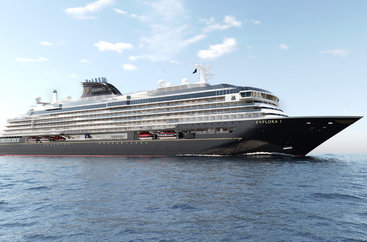
United Arab Emirates, Bahrain, Qatar, Saudi Arabia from Dubai na lodi Explora I
| Ship: | Explora I |
|---|---|
| Route: | United Arab Emirates, Bahrain, Qatar, Saudi Arabia |
| Embarkation and disembarkation: | Dubai, United Arab Emirates |
| Duration: | 7 nights |
United Arab Emirates, Qatar, Bahrain, Saudi Arabia from Dubai na lodi Explora I
| Ship: | Explora I |
|---|---|
| Route: | United Arab Emirates, Qatar, Bahrain, Saudi Arabia |
| Embarkation and disembarkation: | Dubai, United Arab Emirates |
| Duration: | 8 nights |