


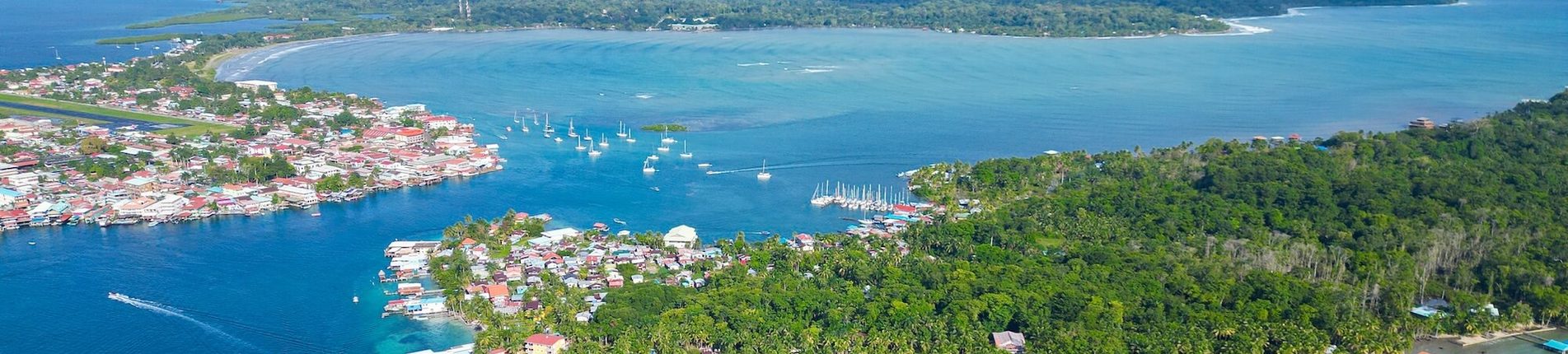
Columbus / Panama
Colón is located on the Caribbean coast of Panama, just a few kilometers from the Atlantic entrance to the Panama Canal, one of the world's most important waterways. The city was founded in the 19th century in connection with the construction of the railway across the Isthmus of Panama, and its importance later increased with the opening of the canal. Colón itself is primarily a bustling port and commercial center, while its surroundings offer an extraordinary combination of technical monuments, tropical nature, and remnants of the Spanish colonial era. During Caribbean cruises , Colón is the starting point for Agua Clara locks, Gatun Lake, San Lorenzo Fort and the historic Portobelo.
What to taste in Colón?
The cuisine of Panama's Caribbean coast combines local, African, Caribbean, and Latin American influences. Typical are fish and seafood, rice, coconut, cassava, and green bananas.
- Carimañolas – fried pastries made from cassava dough, most often filled with spiced meat or cheese. They are a popular Panamanian breakfast and street food.
- Patacones – twice-fried slices of green plantains, served as a side dish or a standalone snack with various sauces.
- Rondón – a hearty Caribbean dish made from fish or seafood, coconut milk, cassava, plantains, and other vegetables. It is particularly typical for the Caribbean areas of Panama.
- Arroz con coco – rice cooked with coconut milk, often served with fish and seafood.
- Ceviche – fresh fish or seafood marinated in citrus juice with onion, coriander, and chili, popular throughout Panama.
- Seco Herrerano – a traditional Panamanian spirit made from sugarcane, consumed neat or used as a base for mixed drinks.
Why will you love Colón?
- Panama Canal within reach – from the visitor center at Agua Clara locks , you can watch massive cargo and cruise ships overcoming the height difference between the Atlantic and Gatun Lake. Here, the scale of one of the world's most famous engineering projects is best appreciated.
- Tropical nature of Gatun Lake – the canal's surroundings are covered by dense tropical forest inhabited by monkeys, sloths, toucans, crocodiles, and other animals. Boat trips on Gatun Lake among the islands created during the canal's construction are popular.
- Forts on the Caribbean coast – Portobelo and San Lorenzo recall the time when gold and silver flowed through Panama from Spanish colonies. Their fortifications are among the most significant remnants of Spanish military architecture in this part of America and are associated with UNESCO World Heritage.
Practical tips:
- Official language: Spanish. In tourist services and organized tours, English is often spoken as well.
- Currency: Panamanian balboa (PAB) and US dollar (USD). The balboa has a fixed exchange rate of 1:1 with the US dollar; Panama does not issue its own banknotes and uses US dollar banknotes in regular circulation, while the balboa exists primarily in coins.
- Opening hours: Shops are usually open from about 9:00 AM to 6:00 or 7:00 PM, large shopping centers and establishments in commercial zones often longer. Restaurants are open until evening hours. Colón Free Zone is primarily a wholesale and commercial area and should not be confused with a regular tourist shopping center.
- Public transport: For cruise ship passengers, it is most practical to use taxis or organized tours, especially when traveling to the locks, Gatun Lake, San Lorenzo, or Portobelo. Colón has bus and rail connections with Panama City; the passenger train along the historic route along the Panama Canal is primarily intended for commuting, and its schedule may not match the cruise ship's stay. When moving independently around Colón, it is advisable to stick to busy areas around the port and use verified transportation.
- Weather: The climate is tropical, warm, and very humid all year round, with temperatures usually around 25–30°C. The Caribbean side of Panama receives more rainfall than the Pacific coast, and showers can occur even during the drier season. The least amount of rainfall usually occurs from January to April, while from May to December, it rains more frequently and heavily.
The most interesting from Colón's history:
Colón was founded in 1850 during the construction of the Panama Railway, which was intended to significantly speed up the journey between the Atlantic and Pacific during the California Gold Rush. Americans called the new city Aspinwall, while locals used the name Colón in honor of Christopher Columbus. After the railway was completed in 1855, the city quickly developed as a major port and transportation hub. Its importance further increased with the construction of the Panama Canal, which was officially opened in 1914 and fundamentally changed global maritime transport. Colón became one of the main centers on its Atlantic side, and in 1948, the Colón Free Zone was established here, which gradually grew into one of the largest free trade zones in the world. The city's development was influenced by fires, economic changes, and long-term social problems, while the port and logistics sector continued to gain importance. Today's Colón remains a strategic point in global shipping, and its history is inextricably linked with the railway, the canal, and trade between the Atlantic and Pacific.
Useful information
Port map:
Places worth seeing:

Souostroví Bocas del Toro na karibském pobřeží Panamy tvoří desítky ostrovů a ostrůvků obklopených tyrkysovým mořem, korálovými útesy a mangrovy. Oblast je známá bohatým podmořským životem a patří k nejvyhledávanějším přírodním destinacím země.

Barevné domy v okolí cruise terminálu v Colónu dodávají přístavní části města výrazný karibský ráz. Colón je jedním z nejdůležitějších přístavů Panamy a hlavní branou k atlantskému vstupu do Panamského průplavu.

Opevnění Portobelo a San Lorenzo chránila v koloniální době důležité přístavy a obchodní cesty, po nichž Španělé přepravovali zlato a stříbro z Ameriky do Evropy. Soubor pevností na karibském pobřeží Panamy je od roku 1980 zapsán na seznamu UNESCO.

Getting to the port:
Cruise ships in Colón primarily use the Colón 2000 Cruise Terminal, which is located directly in the city at the Atlantic entrance to the Panama Canal. The port has two terminals – Terminal 1 for transit ships and Terminal 2 (Home Port), also used as the starting and ending port for some cruises. The complex includes shops, a duty-free zone, restaurants, and other services for passengers. For visiting the main attractions in the area, such as the Agua Clara Locks, Gatun Lake, or Portobelo, a taxi or organized tour is most suitable; the more distant Panama City is located on the opposite, Pacific side of the canal.
Cruises to Colón:

USA, Bahamas, Colombia, Panama, Costa Rica, Jamaica, Kajmanské ostrovy from Miami na lodi Norwegian Sun
| Ship: | Norwegian Sun |
|---|---|
| Route: | USA, Bahamas, Colombia, Panama, Costa Rica, Jamaica, Kajmanské ostrovy |
| Embarkation and disembarkation: | Miami, USA |
| Duration: | 11 nights |