

Calvi (Corsica) / France
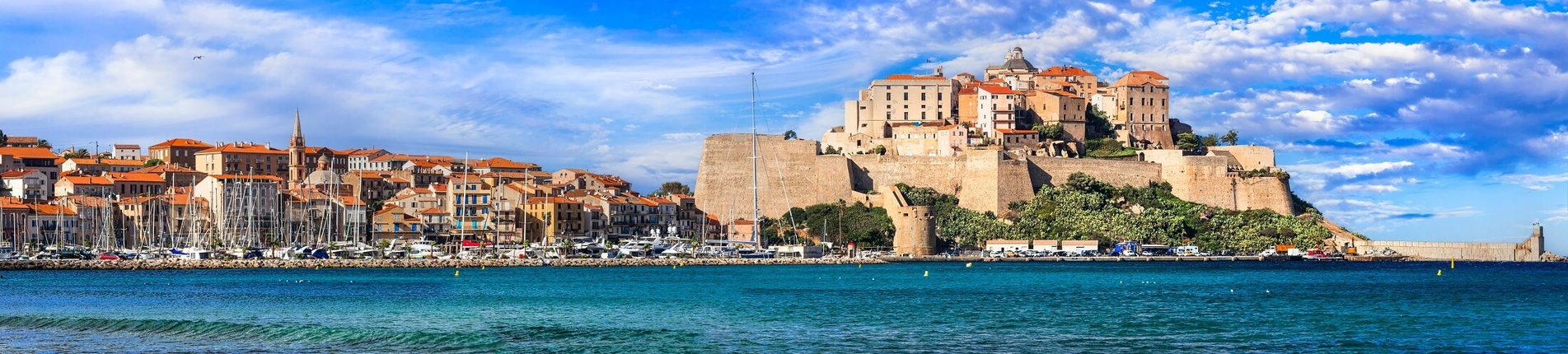
On the northwest coast of Corsica lies Calvi, a town with a historic citadel, a long sandy beach, and views of the surrounding mountains. The historic center, pleasant promenade, and bay with crystal-clear water create a place where exploration easily combines with relaxation. Thanks to its location by the Mediterranean Sea, Calvi is a popular stop when exploring the northern part of the island.
What to taste in Calvi?
Corsican gastronomy is based on local products and traditional preparation methods. Among its most famous components are cheeses, cured meats, chestnuts, and dishes inspired by Mediterranean cuisine.
- Brocciu – fresh Corsican cheese made from sheep's or goat's milk.
- Fiadone – a traditional Corsican dessert made primarily from brocciu, eggs, and lemon. Its consistency resembles a light cheesecake and is often served chilled.
- Figatellu – a distinctive sausage made from pork liver, most commonly grilled. Traditionally served with pulenda or other local side dishes.
- Pulenda – a traditional dish made from chestnut flour, with roots mainly in the mountainous areas of Corsica. It is served, for example, with brocciu, cheeses, or local cured meats.
- Corsican cheeses and cured meats – when visiting Calvi, it's worth tasting coppa, lonzu, or prisuttu and various types of sheep and goat cheeses. You can discover local products at markets or in specialized shops in the city center.
Why will you love Calvi?
- Genoese face of the town – Citadelle de Calvi, Saint-Jean-Baptiste Cathedral, and Saint-Antoine Oratory remind of the town's rich history. From the fortifications, beautiful views of the harbor, bay, and surrounding mountains open up.
- Pleasant seaside atmosphere – a long sandy beach, coastal promenade, and harbor create a pleasant place for relaxation and swimming. The historic center remains just a stone's throw from the coast.
- Picturesque Balagne area – Calvi is located in the Balagne area, known for its picturesque villages, olive groves, and hilly landscape. Worth visiting are, for example, Pigna, Sant’Antonino, or Corbara, and along the coast, you can also take the local train Tramway de Balagne.
Practical tips:
- Official language: French, Corsican is also used on Corsica, but in tourist areas, you can also communicate in English.
- Currency: euro (EUR).
- Opening hours: shops, restaurants, and cafes are usually open during the day and in the evening during the main season. The opening hours of individual monuments may vary according to the season, so it is advisable to check them before visiting.
- Public transport: the center of Calvi is compact, and most main places can be visited on foot. For exploring the coast, an interesting option is the Tramway de Balagne, a local tourist train between Calvi and Île-Rousse, which stops at several beaches along the way. The ride takes approximately 50 minutes and runs several times a day in the summer season.
- Weather: Calvi has a Mediterranean climate with hot and dry summers and mild winters. The summer months are particularly suitable for swimming and beach stays, while spring and early autumn are ideal for trips and exploring the surroundings.
The most interesting from Calvi's history:
The history of Calvi is closely linked to the Genoese Republic, which used the town as an important strategic point from the Middle Ages and gradually built fortifications here. The town's history is associated with the motto "Semper Fidelis", meaning "Always Faithful," referring to its long-standing loyalty to the Genoese Republic. Over the centuries, Calvi withstood several attempts at conquest, and a significant chapter was the siege in 1794, when the town was attacked by British and Corsican forces. After several centuries of Genoese rule, Corsica came under French administration in 1768, marking a new chapter in the island's history and that of Calvi itself.
Useful information
Port map:
Places worth seeing:

Pohled z hradeb citadely na historické centrum, záliv a přístav s jachtami při západu slunce.

Citadela s kamennými hradbami a historickými budovami na pobřeží Středozemního moře.

Výhled z citadely na staré město, záliv s jachtami a přístav.


Getting to the port:
Cruise ships in Calvi usually anchor in the bay and passengers are transported to the mainland using tenders – smaller boats that arrive at the Quai Landry quay in the port of Calvi. Upon disembarking, you are practically right in the lower part of the town, from where the historic center, citadel, and beach are conveniently accessible on foot.
Cruises to Calvi:

Italy, France, Spain from Civitavecchia (Rome) na lodi Explora II
| Ship: | Explora II |
|---|---|
| Route: | Italy, France, Spain |
| Embarkation: | Civitavecchia (Rome), Italy |
| Disembarkation: | Barcelona, Spain |
| Duration: | 7 nights |
Spain, Tunisia, Malta, Italy, France from Barcelona na lodi Explora II
| Ship: | Explora II |
|---|---|
| Route: | Spain, Tunisia, Malta, Italy, France |
| Embarkation and disembarkation: | Barcelona, Spain |
| Duration: | 14 nights |