


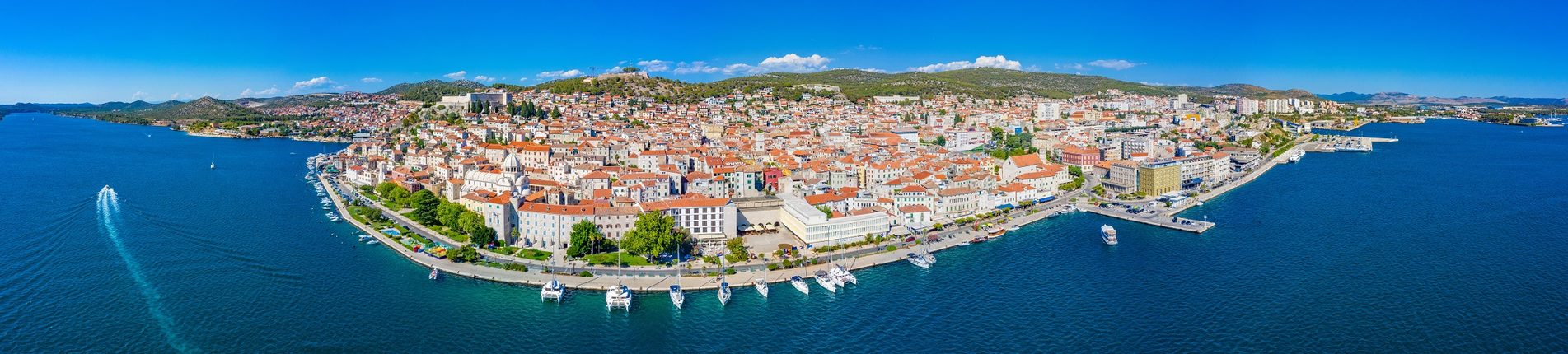
Šibenik / Croatia
On the coast of the Mediterranean Sea lies Šibenik, one of the most charming cities in Croatia, which has preserved its authentic Dalmatian character. Stone streets, historical buildings, and the lively atmosphere of the port create a harmonious blend of tradition, culture, and marine life that you will easily succumb to.
What to taste in Šibenik?
The gastronomy of Šibenik excels with fresh ingredients, simplicity, and a distinct taste of the sea. The local cuisine is based on Dalmatian traditions, where olive oil, aromatic herbs, fish, and wine play the main roles.
- Riblji brudet – a traditional fish stew with tomatoes, onions, and wine, served with polenta.
- Pašticada – slowly stewed beef marinated in wine and vegetables, often with homemade gnocchi.
- Pršut from Drniš – dried ham with a protected designation of origin, exceptionally aromatic thanks to the bora wind.
- Svinjska rebrica s kiselim kupusom – pork ribs with sauerkraut, a popular dish especially in the colder part of the year.
- Grah s kobasicom – thick bean soup with homemade sausage, especially popular in the inland of Dalmatia.
- Punjene paprike – peppers stuffed with minced meat and rice, stewed in tomato sauce, often served with potatoes.
- Fritule – small fried dough balls sprinkled with sugar, an ideal sweet finish.
- Dalmatian wine Babić – a distinctive red wine from the vicinity of Primošten, which perfectly complements local dishes.
Why will you love Šibenik?
- The city of a thousand stone steps and narrow streets – Šibenik enchants with its authentic historical center, which has retained its original Dalmatian character. Every walk through its streets draws you into stories of the past and reveals the unique charm of the city.
- Cathedral of St. James (Katedrala sv. Jakova) – a unique work listed as a UNESCO World Heritage Site, built from stone without the use of mortar. It is a symbol of the city and a masterpiece of Venetian builders.
- Gateway to national parks – nearby are Krka with its beautiful waterfalls and Kornati with an endless archipelago of islets – an ideal destination for nature and yachting enthusiasts.
Practical tips:
- Official language: Croatian, but you can easily communicate in English or Italian.
- Currency: Euro (EUR).
- Opening hours: Shops usually operate from 9:00 to 21:00, with a lunch break between 13:00 and 17:00. Restaurants serve lunch from 12:00 and dinner from 19:00 to late evening hours. Most attractions are accessible until 18:00.
- Public transport: Local buses run around the city, and taxis or scooter rentals are also popular options. In summer, there is also a boat line connecting the port of Šibenik with nearby islands and resorts.
- Weather: Šibenik has a typical Mediterranean climate – hot, dry summers and mild winters. The ideal time to visit is from May to October, when temperatures range between 25 and 32 °C.
The most interesting from the history of Šibenik:
Šibenik is one of the oldest Croatian cities on the Adriatic – first mentioned in the 11th century and was the first city founded by Croats. In the Middle Ages, it became an important port and trade center, contested even by the Venetians. The city's prosperity occurred in the 15th and 16th centuries, when the famous Cathedral of St. James, now a UNESCO World Heritage Site, was built. The defensive system consists of four fortresses – St. Michael, Barone, St. John, and St. Nicholas – which remind of the city's strategic importance at sea. Today, Šibenik is a modern cultural center with a rich heritage, where history intertwines with a lively Mediterranean rhythm.
Useful information
Port map:
Places worth seeing:

Katedrála sv. Jakuba v Šibeniku (Katedrala sv. Jakova) je nejvýznamnější renesanční památkou Chorvatska a jedinou stavbou v Evropě postavenou výhradně z kamene bez použití malty či dřeva. Tento architektonický skvost z 15. století je zapsán na seznamu UNESCO a tvoří srdce historického centra města.

Pevnost sv. Mikuláše (Tvrđava sv. Nikole) se nachází u vstupu do kanálu sv. Antonína a patří k nejvýznamnějším památkám Šibeniku. Byla postavena v 16. století na obranu města před útoky z moře a dnes je zapsána na seznamu UNESCO. Díky své poloze nabízí nádherné výhledy na Jadran i okolní dalmatské pobřeží.

Radnice v Šibeniku se nachází v historickém centru města a je významnou ukázkou renesanční architektury. Budova z 15. století sloužila jako centrum městské správy a dodnes zdobí náměstí s kavárnami a obchody. Před radnicí se často konají místní trhy a kulturní akce, což dodává okolí živou atmosféru.


Getting to the port:
Cruise ships dock either directly at the Šibenik Cruise Port or on the open sea. In the case of docking at sea, a transfer to the mainland is provided using smaller boats (so-called tenders). If the ship docks at the pier in Šibenik port, passengers can walk to the historic city center – the journey takes approximately 10–15 minutes.