


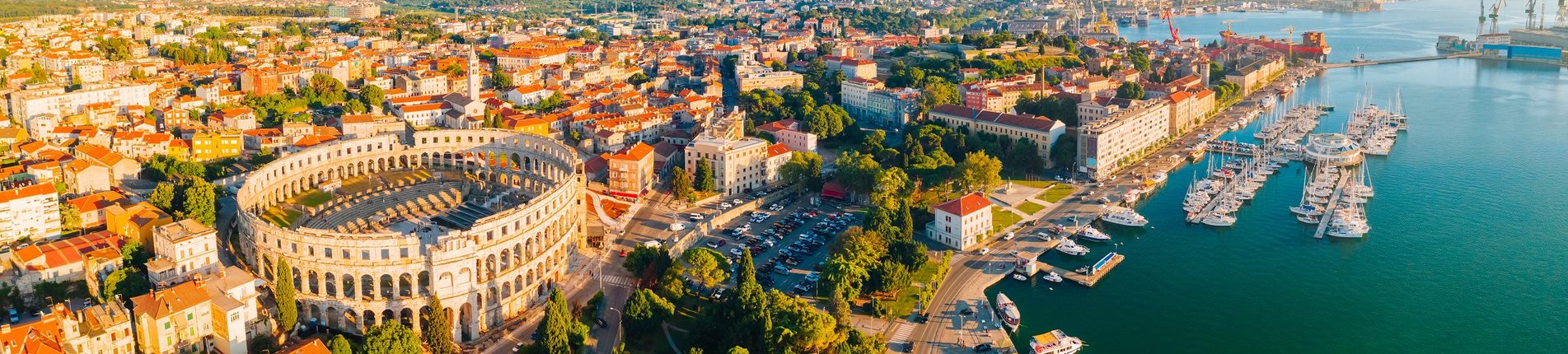
Pula / Croatia
On the southern tip of the Istrian Peninsula lies Pula, one of the most significant cities on the Croatian coast of the Mediterranean Sea. It offers an ideal blend of historical heritage, a relaxed atmosphere, and beautiful seaside surroundings. Pula is a popular stop for cruise ships and a place where you can fully enjoy the true Mediterranean atmosphere.
What to taste in Pula?
The local cuisine is based on traditional Istrian gastronomy, which combines seafood, fresh ingredients, and quality olive oil.
- Istrian truffle – the most valuable ingredient of the region, added to pasta, risottos, and sauces, giving dishes a distinctive aroma.
- Fuži with truffles (Fuži s tartufima) – homemade pasta with aromatic truffle sauce, a symbol of Istrian gastronomy.
- Fuži with žgvacet sauce – hand-rolled pasta served with a thick sauce made from beef or game meat, a traditional dish of Istria.
- Fresh fish and seafood – often grilled with olive oil, garlic, and herbs, complemented by a glass of local wine.
- Black risotto (Crni rižot) – rice with seafood, most often with cuttlefish ink, which gives it a distinctive taste and color.
- Istrian prosciutto and sheep cheese – popular appetizers served with homemade bread and olives.
- Malvazija and Teran – typical wines of the area, ideal complements to local specialties.
Why will you love Pula?
- History at every turn - Pula enchants with ancient monuments, which are among the best-preserved in Croatia. The most significant is the monumental Roman amphitheater from the 1st century. Other icons of the city include the Temple of Augustus and the Arch of the Sergii, which bring the ancient glory of Rome closer.
- A city full of life – The historic center of Pula comes alive with cafes, restaurants, and cultural events. In summer, festivals, concerts in the amphitheater, and markets with local products are held here. Streets and squares invite you to stroll and discover the local atmosphere.
- A place for peace and relaxation – Pula offers beautiful beaches and bays, such as Cyclone Beach, Verudela, and Stoja, ideal for swimming and relaxation. The turquoise sea blends with pine groves and Mediterranean landscapes. Visitors can combine exploring history with tranquility by the sea.
Practical tips:
- Official language: Croatian, you can commonly communicate in English, German, and Italian.
- Currency: Euro (EUR)
- Opening hours: Shops are usually open from 9:00 to 21:00, often with a lunch break. Monuments are generally open until around 18:00. Restaurants serve lunch and dinner all day, often until late in the evening during the summer season.
- Public transport: Buses operated by Pulapromet run throughout the city, connecting the center with surrounding districts and beaches (e.g., Verudela, Stoja).
- Weather: Pula has a Mediterranean climate with warm summers and mild winters. The best time to visit is from May to October, when temperatures reach 25–32 °C.
The most interesting from Pula's history:
The history of Pula dates back to the Roman Empire when the city was one of the most important ports on the Adriatic. After the fall of Rome, Pula was gradually under the rule of the Venetians, French, and Austro-Hungarians, which is reflected in the diverse architecture and cultural heritage of the city. Today, visitors find an interesting connection between the ancient past and the modern port bustle and the relaxed atmosphere of Istria.
Useful information
Port map:
Places worth seeing:

Římský amfiteátr v Pule, jeden z nejlépe zachovaných římských amfiteátrů na světě, vás okouzlí svou monumentální architekturou a historií sahající až do 1. století. Při západu slunce se jeho kamenné zdi proměňují v romantickou kulisu ideální pro procházky i fotografování. Toto ikonické místo odhaluje dávnou slávu římské éry přímo v srdci Istrie.

Zlatá brána v Pule (Ancient Roman Triumphal Arch / Golden Gate) je monumentální římský triumfální oblouk, který kdysi vítal návštěvníky do města. Je symbolem dávné římské slávy a ideálním místem pro procházky historickým centrem. Náměstí kolem brány dodává památce živou atmosféru současného města.

Chrám Augusta v Pule (Ancient Temple of Augustus) je skvostně zachovaný římský chrám s korintskými sloupy, který připomíná dávnou moc a kulturu města. Stojí na historickém náměstí, kde se mísí antická architektura s životem moderní Puly. Návštěvníky okouzlí elegancí a klidem, který chrám vyzařuje uprostřed rušného centra.


Getting to the port:
Cruise ships dock at the Port of Pula, which is located near the historic center. After disembarking, you can walk to the city center – the journey takes approximately 10 to 15 minutes. There is also a shuttle bus available, which will conveniently take you to the entrance of the old town or to the nearest beaches.