


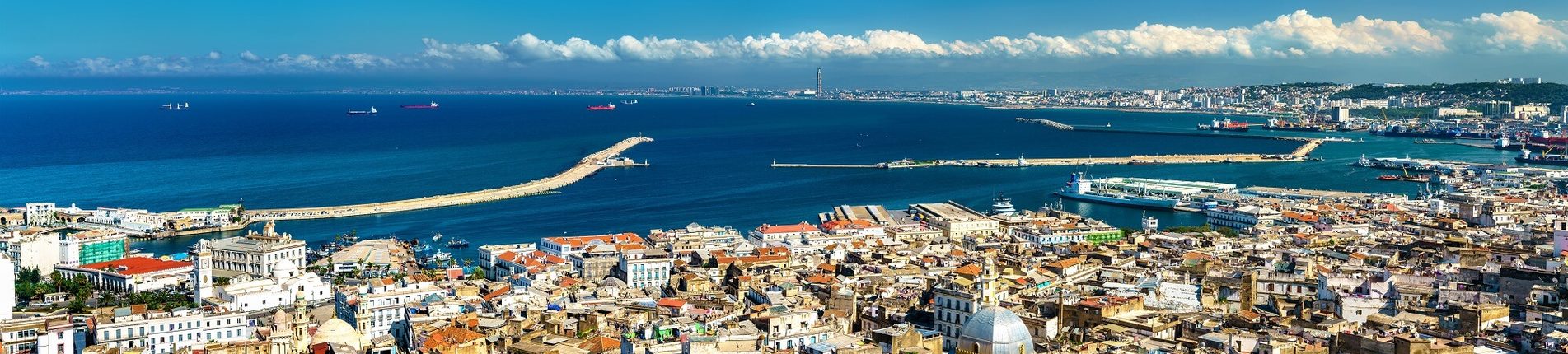
Algiers / Algeria
Algiers, the capital city of Algeria, is located directly on the coast of the Mediterranean Sea and is known primarily for its white buildings, historic Casbah, and bustling streets. When visiting the city, you will experience the Arab, Berber, Ottoman, and French influences that have intertwined over the centuries and left their mark on the architecture and life of the city.
What to taste in Algiers?
The local cuisine is diverse and is primarily based on couscous, vegetables, meat, legumes, and aromatic spices.
- Rechta – a traditional dish typical mainly for the Algiers area. Fine homemade noodles are served with chicken, chickpeas, and vegetables in a lightly spiced sauce.
- Couscous – the foundation of Algerian cuisine, which can be found in many forms. It is served, for example, with vegetables, chickpeas, and meat or chicken.
- Chorba – a popular soup made from vegetables, meat, and small pasta. It is often served as the start of the main meal.
- Bourek – crispy pastry filled with meat, potatoes, egg, or cheese. It is suitable as an appetizer or a quick snack.
- Makroud – sweet pastry made from semolina dough filled with date paste. It is often flavored with orange blossom and drizzled with honey.
Why will you love Algiers?
- The Casbah, which remembers centuries – the historic Casbah is one of the most famous places in Algiers and is listed on the UNESCO World Heritage List. Narrow streets, old houses, mosques, and palaces remind us of the time when Algiers was an important city of the Ottoman Empire.
- The white city above the sea – Algiers is built on slopes above the bay of the same name. From elevated places, there are views of the Mediterranean Sea and the city. Notable places include the Basilica of Notre-Dame d'Afrique, the Martyrs' Memorial, or the Jardin d'Essai du Hamma.
- A city of several cultures – in Algiers, Arab and Berber heritage meets alongside significant traces of the Ottoman and French periods. This is evident not only in architecture but also in cuisine and everyday life.
Practical tips:
- Official language: Arabic and Tamazight. French is also commonly used in the city, while English is encountered less frequently.
- Currency: Algerian dinar (DZD).
- Opening hours: Shops, museums, and landmarks in Algiers have their own opening hours, which may vary depending on the specific place. During Ramadan, operations are often adjusted, so it is good to check current times before visiting.
- Public transport: You can get around Algiers by metro, tram, or bus. An interesting option is also cable cars, which connect the center with higher parts of the city and facilitate transportation in hilly terrain. For shorter distances, you can use taxis.
- Weather: Algiers has a Mediterranean climate. In summer, daily temperatures usually range from 28 to 32 °C, while in winter, it is approximately 16 to 18 °C during the day. The warmest months are July and August, when there is also minimal rainfall.
The most interesting from the history of Algiers:
The history of Algiers dates back to antiquity when the Phoenicians established a trading post here, and later the place became part of the Roman Empire as the city of Icosium. Today's Algiers began to take shape in the 10th century, significantly developed during Ottoman rule, and came under French control in 1830. After a long struggle for independence, Algeria gained independence in 1962, and Algiers became the capital of the new state. The city's historical heritage is also commemorated by the Casbah, which was inscribed on the UNESCO World Heritage List in 1992.
Useful information
Port map:
Places worth seeing:

Velká mešita v Alžíru (Djamaa El Djazair) při západu slunce s výrazným minaretem, který patří k nejvyšším na světě.

Kasbah je historická čtvrť zapsaná na seznamu UNESCO, známá úzkými uličkami, tradičními domy a historickými stavbami.

Památník mučedníků (Maqam Echahid) připomíná oběti alžírské války za nezávislost a patří k významným symbolům města.


Getting to the port:
Cruise ships dock directly at the Port of Algiers, which is located in the bay near the city center. After disembarking, passengers go through passport and security checks and can then continue into the city or go on an organized tour.
Cruises to Algiers:

Spain, Algeria, Colombia, Portugal from Málaga na lodi Explora V
| Ship: | Explora V |
|---|---|
| Route: | Spain, Algeria, Colombia, Portugal |
| Embarkation: | Málaga, Spain |
| Disembarkation: | Lisbon, Portugal |
| Duration: | 7 nights |
Spain, Algeria, Morocco from Barcelona na lodi Explora V
| Ship: | Explora V |
|---|---|
| Route: | Spain, Algeria, Morocco |
| Embarkation: | Barcelona, Spain |
| Disembarkation: | Málaga, Spain |
| Duration: | 7 nights |

Italy, Tunisia, Algeria, Colombia, Spain from Civitavecchia (Rome) na lodi Explora II
| Ship: | Explora II |
|---|---|
| Route: | Italy, Tunisia, Algeria, Colombia, Spain |
| Embarkation: | Civitavecchia (Rome), Italy |
| Disembarkation: | Barcelona, Spain |
| Duration: | 9 nights |