

Lerwick / United Kingdom
Lerwick, the capital of the Shetland Islands in Scotland, is located on the island of Mainland north of the Scottish mainland. The harbor center with traditional stone houses, narrow streets, and a rich maritime history represents an ideal starting point for exploring the entire archipelago. It attracts visitors with its rugged northern landscape, rugged coastline, diverse fauna, and remnants of ancient settlements.
What to taste in Lerwick?
The local cuisine reflects the location of the Shetland Islands in the North Atlantic and a long tradition of fishing. Typical are mainly fresh fish, seafood, and hearty dishes made from lamb, which are among the traditional specialties of this region.
- Shetland mussels and other seafood – local waters offer mussels, scallops, crabs, and lobsters, which are served in simple preparations to highlight their natural flavor.
- Reestit mutton – a traditional specialty made from salted and dried lamb, used, for example, in a hearty soup with potatoes.
- Cullen skink – a thick Scottish soup made from smoked haddock, potatoes, and milk, also popular in the Shetland Islands.
- Sassermaet – a spiced meat mixture typical for Shetland, served, for example, for breakfast or in a bun with onions.
Why will you love Lerwick?
- Historic alleys and harbor atmosphere – Lerwick retains the charm of a traditional harbor town with stone houses and narrow passages called closses. The heart of the center is Commercial Street, lined with historic buildings, shops, and cafes. The maritime past of the archipelago is brought closer by the Shetland Museum and Archives, while Fort Charlotte recalls the city's former defensive role.
- Remnants of ancient settlements – on the outskirts of Lerwick is Clickimin Broch, a stone structure from the Iron Age. Significant archaeological sites in Shetland also include Jarlshof with remnants of settlements from various historical periods and Mousa Broch, one of the best-preserved structures of this type in Scotland.
- Wild nature and Viking traditions – Shetland attracts with rocky cliffs, seabirds, seals, and the possibility of spotting orcas. From Lerwick, you can take a ferry to the island Bressay or explore the coast on organized trips. The local culture is also commemorated by the Up Helly Aa festival, which culminates in the ceremonial burning of a replica Viking ship.
Practical tips:
- Official language: English. A local dialect with historical Scottish and Nordic influences is also used in Shetland.
- Currency: British pound (GBP).
- Opening hours: shops, restaurants, and tourist attractions have individual operating hours. Smaller businesses and some tourist destinations may have limited operations outside the main season, so it is advisable to check times in advance.
- Public transport: bus lines connect Lerwick with other parts of the island of Mainland and selected communities. An interesting option is also the local ferry to the island of Bressay, and organized trips can be taken to more distant parts of the archipelago.
- Weather: Shetland has an oceanic climate with mild summers, cooler winters, frequent winds, and variable weather. In the summer months, daily temperatures often range between 12 and 16 °C, but conditions can change quickly. Even in summer, a waterproof jacket, warmer clothing layer, and sturdy footwear are useful.
The most interesting from the history of Lerwick:
Lerwick began to develop significantly in the 17th century when the protected harbor attracted Dutch fishermen catching herring in the surrounding waters. Gradually, a trading settlement emerged here, benefiting from its strategic location between Scotland, Scandinavia, and the North Atlantic. The name of the town comes from the Old Norse term Leirvik, meaning "muddy bay", and recalls the long historical ties of Shetland to the Nordic countries. In 1708, Lerwick became the capital of the archipelago instead of Scalloway, and in the following centuries, its importance grew with the development of fishing, trade, and port transport. Maritime tradition remains important to local life to this day.
Useful information
Port map:
Places worth seeing:

Pohled na Lerwick s barevnými plachetnicemi.

Pohled z Lerwicku na ostrov Bressay, Shetlandské ostrovy, Skotsko.

Radnice v Lerwicku (Lerwick Town Hall) zaujme viktoriánskou architekturou a patří k významným historickým budovám města.


Getting to the port:
Cruise ships arriving at the Port of Lerwick dock either directly at the harbor piers Mair’s Pier and Holmsgarth 5, or at sea. Ships up to 230 meters in length can dock at the mentioned piers, while larger vessels remain at anchor. In such cases, passengers reach the mainland using smaller boats (tenders), which land at a pier near the town center. Free shuttle bus service to the center is provided from the harbor piers Mair’s Pier and Holmsgarth 5. The historic core with the main shopping street Commercial Street, shops, and cafes is then easily accessible on foot.
Cruises to Lerwick:
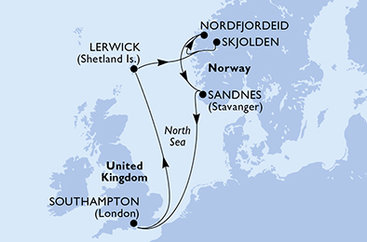
United Kingdom, Norway from Southampton aboard MSC Meraviglia
| Ship: | MSC Meraviglia |
|---|---|
| Route: | United Kingdom, Norway |
| Embarkation and disembarkation: | Southampton, United Kingdom |
| Duration: | 7 nights |
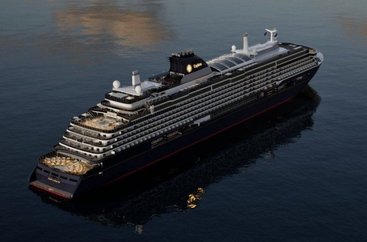
United Kingdom, Denmark, Iceland from Southampton aboard Explora IV
| Ship: | Explora IV |
|---|---|
| Route: | United Kingdom, Denmark, Iceland |
| Embarkation: | Southampton, United Kingdom |
| Disembarkation: | Reykjavík, Iceland |
| Duration: | 7 nights |
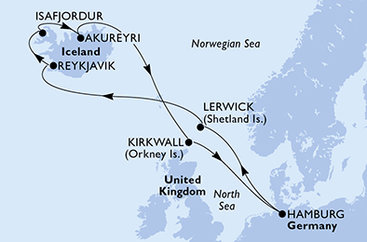
Germany, United Kingdom, Iceland from Hamburg aboard MSC Preziosa
| Ship: | MSC Preziosa |
|---|---|
| Route: | Germany, United Kingdom, Iceland |
| Embarkation and disembarkation: | Hamburg, Germany |
| Duration: | 11 nights |