


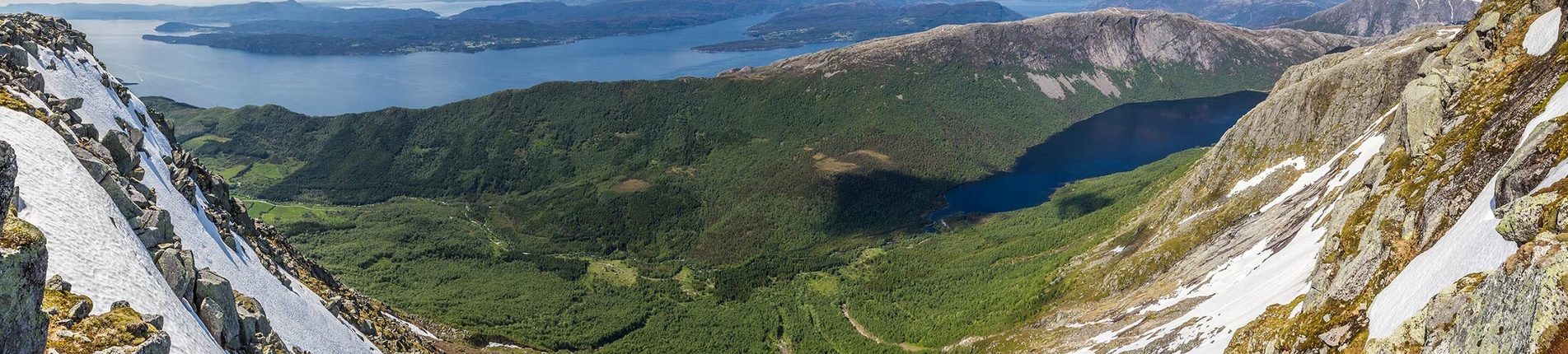
Rosendal / Norway
Rosendal is located on the shore of the Hardangerfjord in western Norway, near the Hattebergfossen waterfall and mountain peaks, which are popular destinations for tourists. The village is known for the historic estate Baroniet Rosendal from the 17th century, but it also attracts with the stone park Steinparken or the Folgefonn Centre, which introduces the local fjords, glaciers, and nature of the Folgefonna National Park. Thanks to the combination of history, hiking, and exploring the Norwegian landscape, Rosendal is an interesting stop on a journey through northern Europe.
What to taste in Rosendal?
The cuisine of western Norway is primarily based on fish, seafood, lamb, and local agricultural products. In Rosendal, it is worth trying traditional Norwegian dishes and, in season, meals prepared from local ingredients.
- Fiskesuppe – Norwegian fish soup made from fish, vegetables, and often cream.
- Gravlaks – salmon marinated with salt, sugar, and dill, sliced into thin pieces. It is usually served with mustard sauce and bread.
- Farikal – a traditional Norwegian dish made from lamb and cabbage, slowly cooked with whole black pepper.
- Raspeballer – potato dumplings popular especially in western Norway. They are served, for example, with bacon, sausage, or salted meat.
- Norwegian waffles – soft heart-shaped waffles served with jam, sour cream, or traditional brown cheese brunost.
Why will you love Rosendal?
- Historic estate with a rose garden – Baroniet Rosendal is a significant monument of western Norway. The castle from 1665 is surrounded by historic gardens and a park, where concerts, exhibitions, and theater performances are held in the summer.
- Nature and trips around the fjord – near the village is the Hattebergfossen waterfall and hiking trails leading to the surrounding mountains. Hikers can look forward to views of the Hardangerfjord and surrounding mountain peaks.
- Stone park and glacier exploration – Steinparken introduces the geology of the area through local rocks and fossils. At the Folgefonn Centre, you can learn more about the Folgefonna glacier, Norwegian fjords, and climate changes.
Practical tips:
- Official language: Norwegian. In tourist facilities, you can usually communicate in English as well.
- Currency: Norwegian krone (NOK).
- Opening hours: The operating hours of local monuments and tourist attractions vary according to the season. The historic estate Baroniet Rosendal offers interior tours mainly during the tourist season, while the gardens are accessible all year round. Before visiting individual places, we recommend checking the current conditions on their official websites.
- Public transport: You can explore Rosendal and its surroundings on foot, by bike, or on kayak trips. An interesting option is also a boat trip on the Hardangerfjordekspressen, which offers views of Norwegian fjords and mountain landscapes. For trips to more distant places, you can use local bus connections.
- Weather: western Norway has an oceanic climate with milder winters, cooler summers, and frequent precipitation. In summer, daily temperatures in Rosendal often range between 15 and 20 °C, but the weather can change quickly. On mountain trips, it is usually cooler, so a waterproof jacket and sturdy shoes are useful.
The most interesting from the history of Rosendal:
The history of Rosendal is closely linked to the noble family Rosenkrantz. In 1658, Danish nobleman Ludvig Rosenkrantz married Karen Mowat, heiress of extensive property, and together they received the Hatteberg estate as a wedding gift. They had a residence built on its site, completed in 1665, which became the center of the local estate. In 1678, the Danish-Norwegian King Christian V elevated the estate to a barony, the only one in Norwegian history. In 1745, it passed into the ownership of the Rosenkrone family, and in 1927 it was donated to the University of Oslo. Thanks to this, the historic estate and the adjacent area have been preserved and today serve as a museum that introduces the life of the nobility and the history of the region.
Useful information
Port map:
Places worth seeing:

Přístav s jachtami v Rosendalu, obklopený horskými vrcholy a malebnou krajinou norských fjordů.

Historické sídlo Baroniet Rosendal v norské obci Rosendal, jehož historie sahá do 17. století. Zámek obklopuje park s upravenými zahradami.

Kvetoucí rostliny v zahradě historického sídla Baroniet Rosendal v Norsku.


Getting to the port:
Cruise ships remain anchored in the Hardangerfjord near Rosendal and passengers are transported to shore by smaller boats, known as tenders. After disembarking, the town center is easily accessible on foot. From there, you can head to the Folgefonn Centre visitor center or embark on one of the hiking trails around the fjord.
Cruises to Rosendal:

Belgium, Norway, Denmark from Zeebrugge (Bruges) na lodi Explora IV
| Ship: | Explora IV |
|---|---|
| Route: | Belgium, Norway, Denmark |
| Embarkation: | Zeebrugge (Bruges), Belgium |
| Disembarkation: | Copenhagen, Denmark |
| Duration: | 7 nights |
United Kingdom, Belgium, Norway, Denmark from Southampton na lodi Explora IV
| Ship: | Explora IV |
|---|---|
| Route: | United Kingdom, Belgium, Norway, Denmark |
| Embarkation: | Southampton, United Kingdom |
| Disembarkation: | Copenhagen, Denmark |
| Duration: | 8 nights |


