


Isle of Youth (Isla de la Juventud) / Cuba
Isla de la Juventud (Island of Youth) is the second largest Cuban island. You can find it in the Bay of Batabanó about 65 km southwest of Cuba, and today it has about 65,000 inhabitants.
Not much is known about the island's history before the end of the 15th century; it was inhabited by the Siboney tribe, who lived by gathering plants and hunting animals and fish. It was not discovered by Europeans until 1494 by Christopher Columbus, who named it La Evangelista. Later, the Island of Youth was also known as the Island of Parrots (Isla de Cotorras), the Island of Pines (Isla de Pinos), the Island of Treasures (Isla de Tesoros), or the Island of Pirates (Isla de los Piratas). It served them as a convenient hideout for their loot obtained by attacking ships. The legends of treasure hidden on the island laid the foundation for many famous novels.
Until the beginning of the 20th century, it was unclear whether the island belonged to Cuba or the USA, but the 1925 treaty assigned it to Cuba.
The island's climate is subtropical, and you should prepare for frequent hurricanes. A large part of the island is covered with pine forests, which are cut for wood, and marble is mined in the north. However, the economy is based on fishing and agriculture, focusing on growing citrus fruits and vegetables.
On the northern coast of the island lies its capital, Nueva Gerona, founded in 1830 under the name Polonia Reina Amalia. Nearby, in 1932, the five-story Presidio Modelo, a uniquely circular prison in Latin America, was built. Between 1953 and 1955, Fidel Castro and his brother Raul were imprisoned here by Batista's regime. After the Cuban Revolution, the same facility was used to imprison regime enemies and military dissidents. It lost its function in 1967, was declared a national monument, and the rooms that once served as a hospital became a museum.
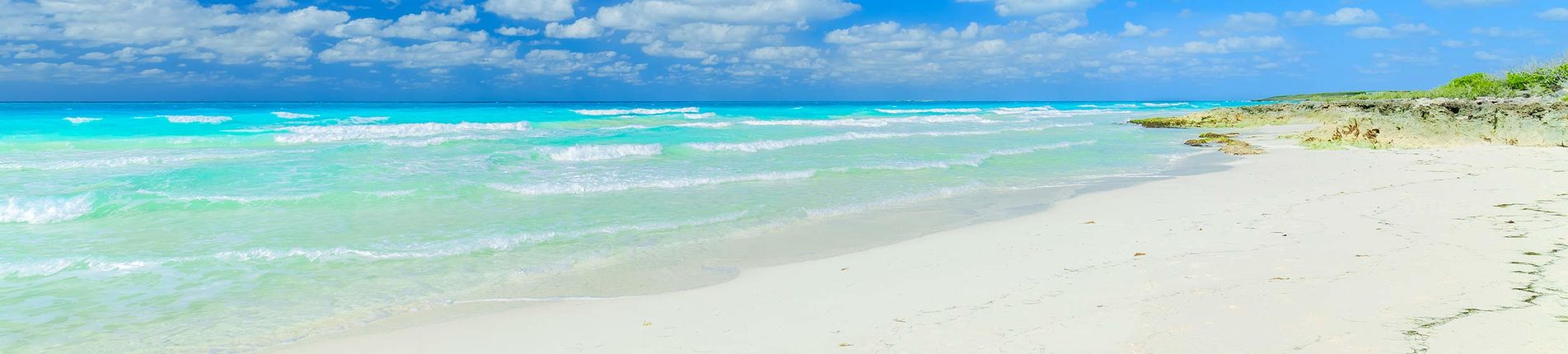
Today, Isla de la Juventud is a popular destination for cruise ships – tourists come here mainly for the beautiful beaches with black sand, reminiscent of the island's volcanic origin, beautiful nature, and especially diving.
Places Worth Seeing
Neuva Gerona – Visit the peaceful capital of the island and see the Presidio Modelo prison.
Cueva de Punta del Este – Visit the cave with rare pre-Columbian pictograms left here by the original Siboney Indian tribe.
Cabo Francés – If diving is your passion, then this is the right place to explore life beneath the sea surface.
Hotel Colony – The best accommodation on the island is offered by the hotel, which belonged to the Hilton chain before being nationalized by Castro's government.
Cayo Largo del Sur – About 100 km east of Isla de la Juventud, you will find an islet with beautiful white beaches, popular mainly with sport fishermen.
Places worth seeing:
