


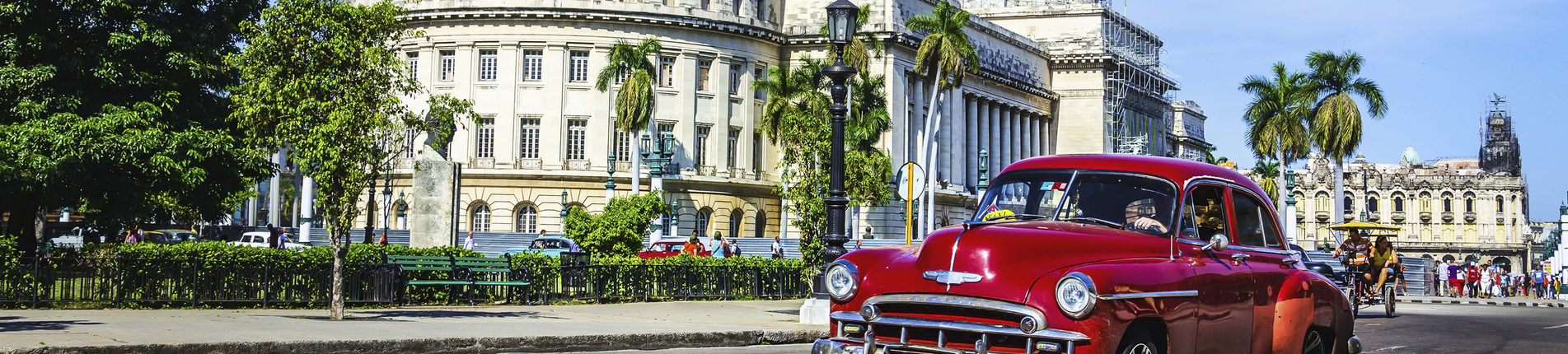
Havana / Cuba
The Cuban capital Havana, with its 2.2 million inhabitants, is one of the largest and most significant centers in the Caribbean. The streets of the Havana Vieja district – Old Havana – recall its famous Spanish colonial past, and it is no wonder that they were inscribed on the UNESCO World Heritage List in 1984.
The old town lies in the safe bay of Bahia de la Habana in the north of the island, less than 160 km from the American Key West. The protected location of the bay attracted the Spaniards led by the famous conquistador Diego Velázquez as early as 1509. The city itself was founded 4 years later and soon became an important base for further conquest expeditions to the American continent. Especially in the 18th and 19th centuries, Havana flourished as the center of colonial Cuba, with a number of noble palaces, baroque churches, and several fortresses built here. Gradually, beautiful parks and boulevards, mansions, art deco houses, and other magnificent monuments began to appear, showcasing the wealth and sophistication of Cuban architecture. Thanks to its beauty, Havana was often nicknamed the "Paris of the Caribbean."
In the first half of the 20th century, Cuba became popular among American tourists, who flocked here by the thousands during the American Prohibition. Luxury hotels, casinos, and bars grew as quickly as crime. In the 1930s, Havana was a notorious den of vice, which the local residents were unwilling to accept, just as they were with the pro-American policies. After the revolution led by Fidel Castro, the situation completely changed. With substantial help from the USSR, modern socialist buildings, monuments, and museums dedicated to local heroes fighting for socialism were built in Havana. After the collapse of the USSR, there was also a sharp change for the worse in Havana. Many new and historical buildings began to decay due to a lack of funds for repairs. Even today, Havana faces many problems, but the historic center has undergone a well-deserved renovation in recent years, allowing tourists to admire beautiful colonial palaces, museums, and wide boulevards in its streets. Among the biggest attractions are the Capitol – the former seat of the Cuban parliament, Obispo Street, known for its nightlife, medieval fortresses, and the unique atmosphere of this city.
Places worth seeing:
- Havana Vieja
- Capitol
- Cathedral of St. Christopher
- Plaza Vieja
- Plaza de Armas
Enjoy local specialties…
- Rum – Havana Club, Santiago de Cuba, Caney, Legendario, …
- Cocktails – Mojito, Cuba libre, Daiquiri, …
- Boliche – beef stuffed with sausage and egg
- Seafood of all kinds
- Cocoa
Places worth seeing:

Typická havanská ulička, Kuba

Pohled na kubánské město Havanu

