

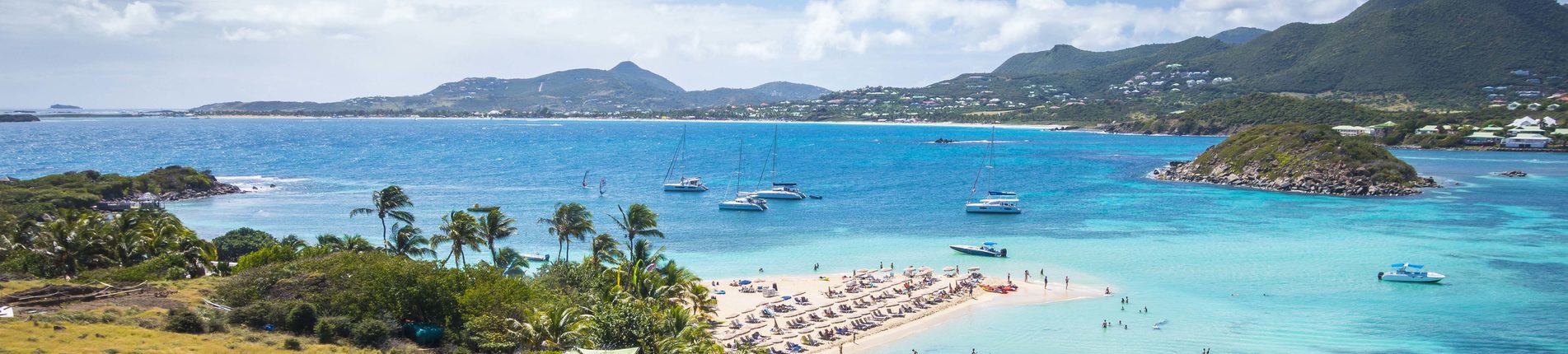
Philipsburg (Saint Martin) / Constituent Countries of the Netherlands
Saint Martin is one of the most visited islands in the Caribbean. Despite its small area (87 km2), it is divided between France and the Netherlands, making it a true world unique. The two parts differ – the Dutch part is busier and more commercial. The French part is calm, intimate, and without large hotel resorts. The largest and main city of the Dutch part is Philipsburg, a beautiful colonial town with pastel houses and dozens of shops offering electronics, luxury items, clothing, and local products. The island is also a duty-free zone, making Philipsburg a true shopping paradise. On the other hand, Marigot, the capital of the French part, is somewhat quieter, but with renowned restaurants and the historic Fort St. Louis. The biggest attraction of the entire island is Maho Beach, which lies right at the end of the runway of Princess Juliana International Airport. Planes land just a few meters above tourists' heads, and besides pleasant swimming, visitors also experience a bit of adrenaline.
During the long history of the island, several indigenous tribes have inhabited it. The first to arrive were probably the Ciboney tribes from Cuba, followed by the Arawaks, whose society was overthrown in the 8th century by the warlike Caribs. They also encountered Christopher Columbus, who visited during his second expedition to the shores of the New World. It was November 11, 1493, the feast of St. Martin, after whom the island was named. St. Martin, however, remained out of the colonizers' interest for many years. It wasn't until the first half of the 17th century that it became a subject of dispute between the French and the Dutch, whose squabbles eventually led to the signing of the Treaty of Concordia in 1648, agreeing on the joint sharing of the island. With the cultivation of the island and the beginning of cotton, tobacco, and sugar cane farming, both powers brought in a large number of slaves. Their number soon exceeded the number of landowners. However, the cruel treatment led to frequent rebellions until slavery was abolished on the French side in 1848. In the Dutch part, slavery lasted another 15 years. Without slaves, however, the economy began to suffer significantly. Great support came in 1939 when the city of Philipsburg was declared a duty-free port. During World War II, the Americans established a military base and built an airport here. This significantly contributed to the later development of tourism, which the Dutch began to massively support in the 1950s. It took the French another 20 years. Today, tourism is the main component of the economy. The pleasant island with a European atmosphere, good cuisine, and beautiful beaches is visited by up to 1 million tourists annually.
Places worth seeing:
Philipsburg – Beach
Philipsburg – Voorstraat
Philipsburg – Captain Hodge Pier
Maho Beach
Marigot – Harbor
Enjoy local specialties…
Guavaberry – traditional liqueur from local guavaberry berries
Callaloo – soup with spinach, okra, pork slices, and spices
Philipsburg pancakes – local pancakes with pumpkin puree
Places worth seeing:

Maho beach - K pláži bezprostředně přiléhá přistávací dráha Mezinárodního letiště princezny Juliany, díky níž získala popularitu, Svatý Martin

Pohled na město Phlipsburg, Svatý Martin

Krásné čisté moře ve Philipsburgu, Svatý Martin
Cruises to Philipsburg:
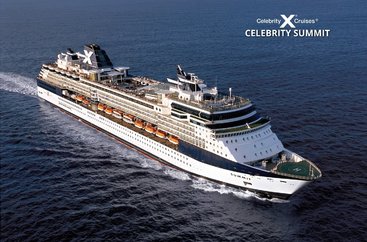
USA, Svatý Martin from San Juan na lodi Celebrity Summit
| Ship: | Celebrity Summit |
|---|---|
| Route: | USA, Svatý Martin |
| Embarkation: | San Juan, USA |
| Disembarkation: | Fort Lauderdale, USA |
| Duration: | 4 nights |
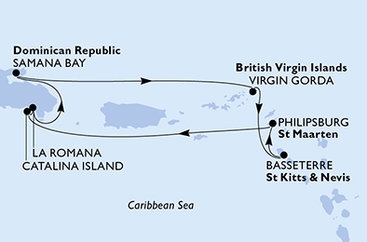
Dominican Republic, British Overseas Territory, Saint Kitts and Nevis, Svatý Martin from La Romana na lodi MSC Opera
| Ship: | MSC Opera |
|---|---|
| Route: | Dominican Republic, British Overseas Territory, Saint Kitts and Nevis, Svatý Martin |
| Embarkation and disembarkation: | La Romana, Dominican Republic |
| Duration: | 7 nights |
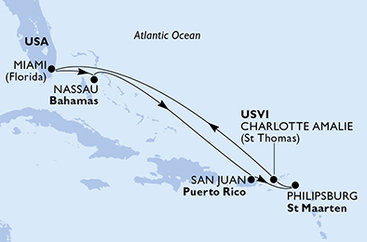
USA, Bahamas, Svatý Martin from Miami na lodi MSC Meraviglia
| Ship: | MSC Meraviglia |
|---|---|
| Route: | USA, Bahamas, Svatý Martin |
| Embarkation and disembarkation: | Miami, USA |
| Duration: | 8 nights |