


Rio de Janeiro / Brazil
Rio de Janeiro is one of the most famous cities in Brazil and thanks to its location between the ocean, mountains, and tropical nature, it seems almost unreal. The iconic statue of Christ the Redeemer towers over the city, which has been included among the New Seven Wonders of the World and today is one of the most prominent symbols of all South America. The city has also gained fame thanks to the legendary beaches of Copacabana and Ipanema, the lively atmosphere and samba rhythms, which are literally present at every step. It is precisely the combination of dramatic landscapes, culture, and a relaxed lifestyle that makes Rio de Janeiro a destination that is hard to forget.
What to taste in Rio de Janeiro?
The local gastronomy combines Portuguese, African, and South American influences and offers a diverse mix of bold flavors and aromas.
- Feijoada – a traditional Brazilian dish made from black beans and various types of meat, served with rice, orange, and manioc flour.
- Moqueca – a fish or seafood stew prepared with coconut milk, tomatoes, coriander, and palm oil.
- Churrasco – juicy grilled meat served on skewers, typical for Brazilian rodízio restaurants.
- Pão de queijo – small cheese bread with a soft interior, often served for breakfast or with coffee.
- Açaí bowl – a refreshing mix of Amazonian açaí berries topped with fruit, banana, or granola.
- Caipirinha – a famous Brazilian cocktail made from limes, cane sugar, and cachaça, which is an essential part of evening gatherings by the beach.
Why will you love Rio de Janeiro?
- The city between mountains and ocean – Rio de Janeiro offers unique scenery where tropical nature blends with a bustling metropolis. Views from the top of Corcovado or from the Sugarloaf Mountain (Pão de Açúcar) are among the most beautiful in all of Brazil.
- Famous beaches and relaxed atmosphere – Copacabana, Ipanema, or Leblon are symbols of the local lifestyle. Long promenades, street music, sports, and cafes by the ocean create the typical energy that is inseparable from Rio.
- Music, carnival, and cultural heritage– the city is considered the cradle of samba and the venue for one of the largest carnivals in the world. Besides that, it captivates with historic neighborhoods, colonial architecture, and a landscape listed as a UNESCO World Heritage Site, with the dominant feature remaining Christ the Redeemer, one of the New Seven Wonders of the World.
Practical tips:
- Official language: Portuguese, but in tourist areas, you can often communicate in English or Spanish.
- Currency: Brazilian real (BRL).
- Opening hours: Shops in Rio de Janeiro are usually open from about 9:00 to 19:00, shopping centers even longer. Restaurants and bars are mainly active in the evening and often operate until late at night.
- Public transport: The city has a metro, buses, and suburban trains. An interesting feature is the historic Santa Teresa tram, which runs through the hilly district and offers beautiful views of the city.
- Weather: Rio de Janeiro has a tropical climate with high temperatures all year round. The main season lasts from December to March, when temperatures often range around 30–35 °C.
The most interesting from the history of Rio de Janeiro:
Rio de Janeiro was founded by the Portuguese in 1565 and thanks to its strategic location, it quickly transformed into a key port and trade center of the region. During the gold and diamond mining period, it played a crucial role as the main export gateway for wealth flowing from the Brazilian interior to Europe. At the beginning of the 19th century, the city became the seat of the Portuguese royal court, which fled here from Napoleon, and for a time it became the center of the entire Portuguese empire outside Europe. After the declaration of Brazil's independence, Rio was its capital for many decades until 1960, when Brasília took over this role. Today, Rio is considered a cultural icon of the country, and its unique landscape has been listed as a UNESCO World Heritage Site.
Useful information
Port map:
Places worth seeing:

Letecký pohled na sochu Krista Spasitele na vrcholu hory Corcovado v Rio de Janeiru, jednu z nejznámějších památek Brazílie.

Pláž Copacabana v Rio de Janeiru patří mezi nejznámější pláže Brazílie

Pláž Ipanema v Rio de Janeiru patří mezi nejznámější pláže města a je oblíbeným místem pro odpočinek, koupání a sportovní aktivity.


Getting to the port:
Cruise ships dock at the Port of Rio de Janeiro in the modern Pier Mauá terminal, which is located near the center of Rio de Janeiro. Thanks to its location, it allows for very easy access to the city center – on foot, by taxi, bus, or the modern VLT tram, which connects the port with both the historical and modern parts of Rio. From the terminal, trips are often organized to the Christ the Redeemer statue on Corcovado Mountain, to the famous beaches of Copacabana and Ipanema, or to the Santa Teresa district.
Cruises from Rio de Janeiro:

Brazil from Rio de Janeiro na lodi MSC Virtuosa
| Ship: | MSC Virtuosa |
|---|---|
| Route: | Brazil |
| Embarkation: | Rio de Janeiro, Brazil |
| Disembarkation: | Santos, Brazil |
| Duration: | 1 night |

Brazil from Rio de Janeiro na lodi MSC Musica
| Ship: | MSC Musica |
|---|---|
| Route: | Brazil |
| Embarkation and disembarkation: | Rio de Janeiro, Brazil |
| Duration: | 7 nights |
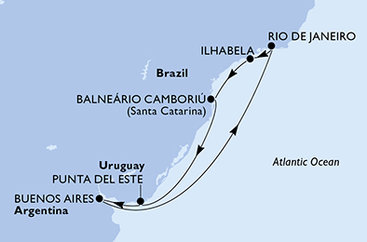
Brazil, Uruguay, Argentina from Rio de Janeiro na lodi MSC Splendida
| Ship: | MSC Splendida |
|---|---|
| Route: | Brazil, Uruguay, Argentina |
| Embarkation and disembarkation: | Rio de Janeiro, Brazil |
| Duration: | 8 nights |
Cruises to Rio de Janeiro:

Brazil from Santos na lodi MSC Divina
| Ship: | MSC Divina |
|---|---|
| Route: | Brazil |
| Embarkation: | Santos, Brazil |
| Disembarkation: | Rio de Janeiro, Brazil |
| Duration: | 1 night |
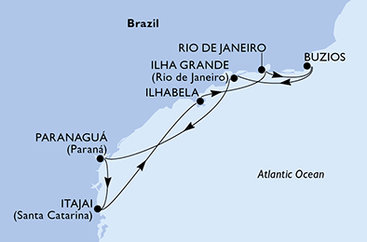
Brazil na lodi MSC Musica
| Ship: | MSC Musica |
|---|---|
| Route: | Brazil |
| Embarkation and disembarkation: | Paranaguá, Brazil |
| Duration: | 7 nights |
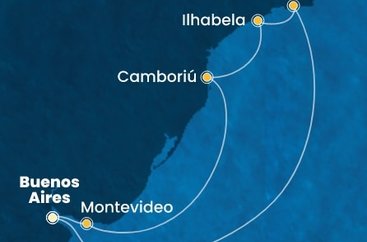
Argentina, Uruguay, Brazil from Buenos Aires na lodi Costa Serena
| Ship: | Costa Serena |
|---|---|
| Route: | Argentina, Uruguay, Brazil |
| Embarkation and disembarkation: | Buenos Aires, Argentina |
| Duration: | 8 nights |


