

Melbourne / Australia
On the southeastern coast of Australia, in the natural bay of Port Phillip, lies the continent's second-largest city and the capital of the province of Victoria, Melbourne. The city, which has been voted the best place to live in the world for several years in a row, is home to 4.7 million residents.
Already 30-40 thousand years before the arrival of Europeans, the area of today's Melbourne was inhabited by hunters and gatherers, and the city was officially founded in 1835 by British settlers of the then colony of New South Wales. In 1851, Melbourne became the capital of the newly established colony of Victoria, and during the gold rush of the 1850s, it was one of the largest and wealthiest cities in the world. After the formation of the Australian Federation in 1901, Melbourne served as the temporary seat of government until 1927, and after World War II, it continued to grow, especially with European immigrants. Today, the city is a significant financial center and one of Australia's busiest ports.
The center of Melbourne is an interesting mix of historical and modern architecture. The streets are lined with buildings from the late 19th and early 20th centuries and are home to countless shops and cafes, as well as five of Australia's seven tallest buildings. The tallest is the Eureka Tower with a platform on the 88th floor, offering stunning views of the surrounding area in favorable conditions. Historical buildings include the Melbourne Town Hall, the unfinished Parliament House, and St. Paul's Cathedral from 1891. A good way to see them is the circular tram with commentary, which circles the city center several times an hour for free.
Melbourne is rightly nicknamed Australia's "cultural capital": it is the birthplace of Australian Impressionism, film, and television industry, as well as a UNESCO City of Literature (the State Library of Melbourne is one of the oldest cultural institutions) and home to many galleries and museums. The National Gallery of Victoria was founded in 1861 and is the oldest Australian public art museum and the 10th most visited in the Asia-Pacific. The Royal Exhibition Building, built for the International Exhibition in 1880, was even listed as a UNESCO World Heritage Site. Street art, which is one of Melbourne's main tourist attractions, is also worth mentioning.
The nickname "garden city" refers to the countless parks and green spaces that Melbourne offers its visitors and residents. Nature lovers should not miss a visit to the Melbourne Zoo or Aquarium, where they can even dive with sharks.
The city boasts beautiful sandy beaches, with surfing beaches located about 85 kilometers southeast. A boat ride on the Yarra River is definitely worth it.
Experiencing Melbourne from a culinary perspective means tasting the countless cuisines that the city's international gastronomic scene offers. From Italian pizza to Peking duck.
Places worth seeing
Melbourne Esplanade – Take a walk along the city's waterfront promenade, enjoy the beautiful beach, and the famous market with crafts and art products.
National Gallery of Victoria – Visit the extensive art gallery, founded in 1861, and view works by Australian and international authors.
Chinatown – Get lost in the alleys of the Chinese quarter from 1851 and taste Chinese, Japanese, Thai, or Vietnamese cuisine.
Eureka Tower – Enjoy stunning views of the city from the 88th floor of Melbourne's tallest skyscraper.
Melbourne Aquarium – Admire the rich underwater life, and if you're brave enough, go diving with sharks.
Yarra River – Take a boat ride on the Yarra River and see Melbourne from a new perspective.
Melbourne ZOO – Don't miss a visit to the zoo with a long tradition and meet Sumatran tigers, Asian elephants, and orangutans.
Places worth seeing:

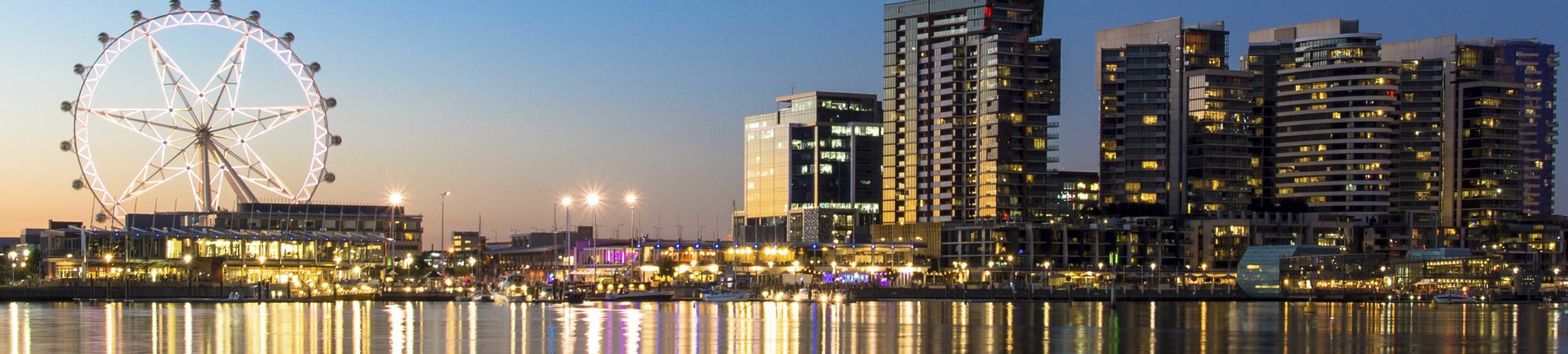
Nábřeží Docklands, Melbourne, Austrálie

Železniční stanice Flinders Street - slouží celé metropolitní železniční síti. Melbourne, Austrálie
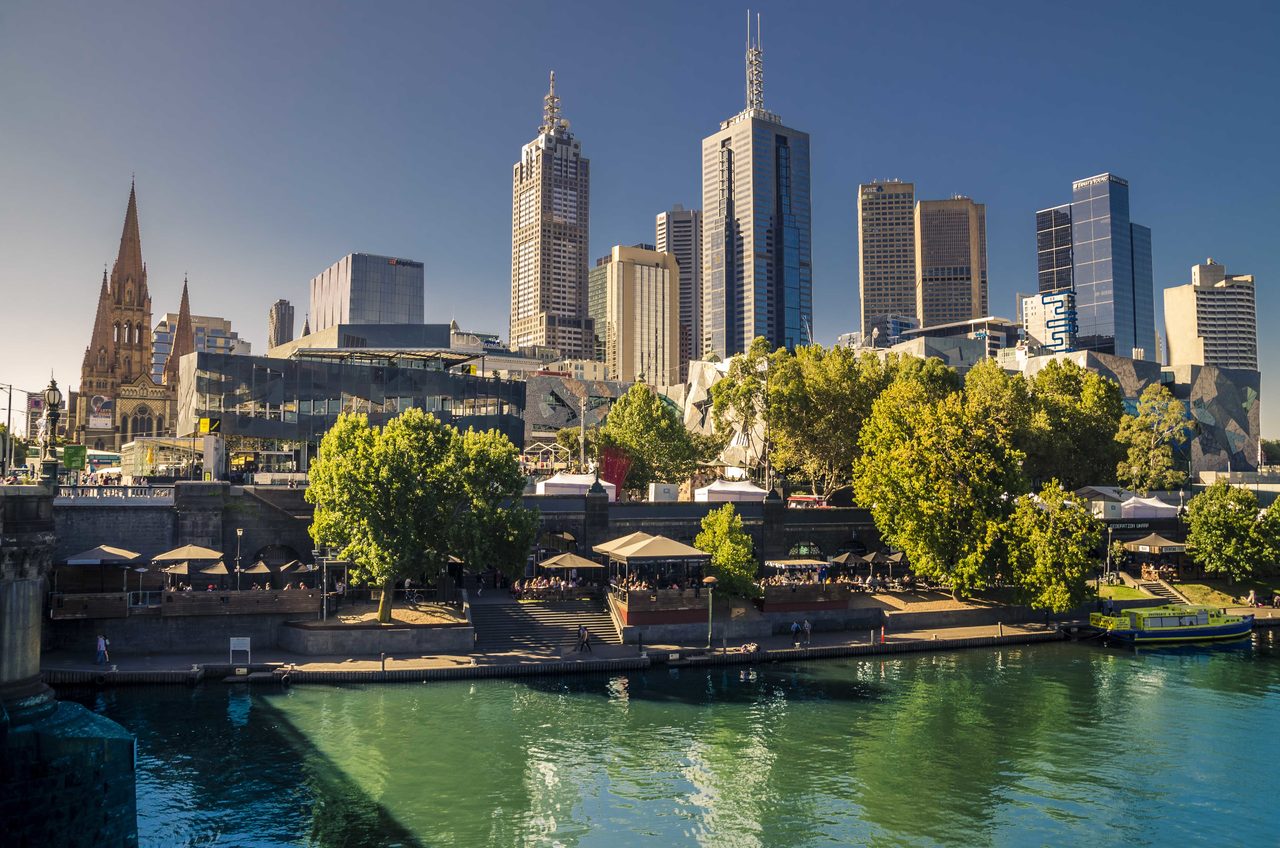
Pohled na mrakodrapy a řeku Yarra, Melbourne, Austrálie
Cruises to Melbourne:

Australia from Sydney na lodi Celebrity Solstice
| Ship: | Celebrity Solstice |
|---|---|
| Route: | Australia |
| Embarkation and disembarkation: | Sydney, Australia |
| Duration: | 8 nights |