


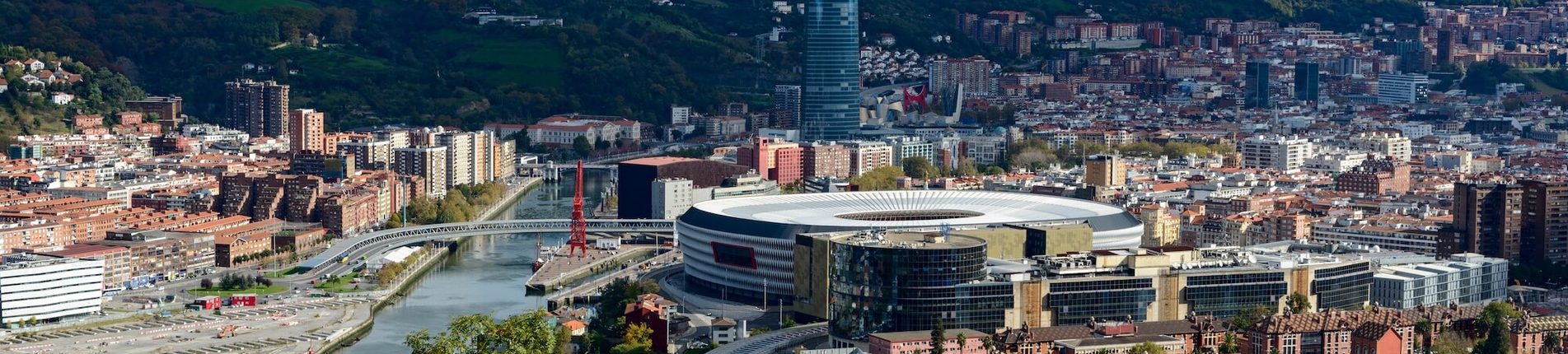
Bilbao / Spain
Bilbao is located in the north of Spain in the autonomous Basque Country, in the valley of the Nervión River near the coast of the Bay of Biscay. The largest city in the Basque Country has been an important commercial and industrial center for centuries, but in recent decades it has undergone a remarkable transformation into a modern metropolis known for its architecture, art, and top-notch gastronomy. Nevertheless, it retains a distinct Basque identity, its own traditions, and an atmosphere that sets it apart from cities in other parts of the country. The green hills surrounding the city and the proximity to the ocean complete the character of Bilbao, which is one of the most interesting stops during cruises on the Atlantic Ocean.
What to taste in Bilbao?
Basque cuisine is one of the most distinctive gastronomic traditions in Spain, based on high-quality local ingredients, fresh fish and seafood, and simple yet bold flavor combinations.
- Pintxos – small snacks served in bars, often on a piece of bread and topped with fish, seafood, cheese, meat, or vegetables. They are an inseparable part of social life in Bilbao.
- Bacalao al pil-pil – cod prepared in a delicate sauce of olive oil, garlic, and juice released from the fish, one of the classics of Basque cuisine.
- Bacalao a la vizcaína – cod in a traditional red sauce associated with the Biscay area.
- Chipirones en su tinta – small squid prepared in their own dark ink sauce, one of the typical dishes of the region.
- Marmitako – a traditional fisherman's dish made from tuna, potatoes, peppers, and onions, originally prepared on fishing boats.
- Carolina – a typical Bilbao pastry consisting of a dough cup with a high cap of meringue decorated with chocolate and egg yolk cream.
Why will you love Bilbao?
- Architecture and art – the symbol of the city's modern transformation is the Guggenheim Museum, whose striking building was designed by architect Frank Gehry. Contemporary architecture in Bilbao blends with historical buildings and former industrial districts along the Nervión River.
- Casco Viejo and Basque atmosphere – the historic heart of Bilbao is Casco Viejo, whose oldest part is known as Siete Calles – Seven Streets. Narrow alleys, squares, churches, traditional shops, and pintxos bars create one of the liveliest parts of the city.
- Gastronomy and Basque culture – Bilbao is a great place to explore the unique culture of the Basque Country, reflected in the local language, traditions, and cuisine. Visiting traditional pintxos bars and the Mercado de la Ribera market is one of the best ways to experience the city's everyday life.
Practical tips:
- Official language: Spanish and Basque (Euskara)
- Currency: Euro (EUR)
- Opening hours: Smaller shops may have a break during the afternoon, while larger stores and shopping centers are usually open continuously until the evening. Restaurants typically serve dinner later than is common in Central Europe.
- Public transport: Bilbao has a well-functioning network of metro, trams, and buses. The historic center can be comfortably explored on foot, and the metro is also practical for connections to the coastal town of Getxo, where the ship terminals are located.
- Weather: The northern coast of Spain has a mild oceanic climate. Summers are pleasantly warm, winters mild, and rainfall can occur throughout the year, making the surrounding landscape significantly greener than in most of southern Spain.
The most interesting from the history of Bilbao:
Bilbao was founded in 1300 by Diego López V. de Haro, lord of Biscay, in a location that offered suitable conditions for trade and a port thanks to the Nervión River. Over the following centuries, the city prospered mainly from trade in iron and wool and gradually became one of the most important commercial centers in northern Spain. A significant transformation occurred in the 19th century, when iron ore mining, metallurgy, shipyards, and banking made Bilbao one of the country's main industrial centers. Rapid industrialization continued into the 20th century, but from the 1970s and 1980s, the city was hit by the decline of traditional heavy industry and rising unemployment. Bilbao therefore initiated a large-scale transformation of former industrial and port areas, which significantly changed the city's appearance. The symbol of this renewal became the Guggenheim Museum, opened in 1997 according to the design of American architect Frank Gehry. The successful revitalization of Bilbao subsequently became an internationally known example of transforming an industrial city into a modern center of culture, architecture, and services.
Useful information
Port map:
Places worth seeing:

Guggenheimovo muzeum patří k nejznámějším symbolům Bilbaa a proslulo svou futuristickou stavbou pokrytou titanovými pláty. Budovu navrhl architekt Frank Gehry a její otevření v roce 1997 se stalo symbolem proměny někdejšího průmyslového města v moderní kulturní metropoli.

Mercado de la Ribera je rozlehlá krytá tržnice stojící na břehu řeky Nervión v sousedství historického centra Bilbaa. Pod jednou střechou nabízí čerstvé ryby, mořské plody, maso, sýry, zeleninu i další typické produkty baskické kuchyně.

Historické centrum Casco Viejo je nejstarší částí Bilbaa a jeho srdce tvoří původních Siete Calles neboli Sedm ulic. Úzké uličky s historickými domy, malými obchody a tradičními bary s pintxos patří k nejživějším částem města.


Getting to the port:
Cruise ships dock at the port of Bilbao in the coastal town of Getxo, approximately 15 km from the center of Bilbao. The modern cruise terminals are located near Ereaga beach and the yacht harbor. You can reach the center of Bilbao by metro, bus, or taxi, and cruise lines usually also provide shuttle buses between the port and the city center. The journey by car or shuttle bus takes approximately 20–30 minutes, depending on traffic conditions.
Cruises to Bilbao:
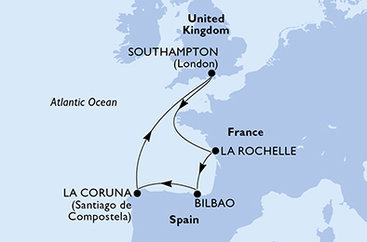
United Kingdom, France, Spain from Southampton aboard MSC Meraviglia
| Ship: | MSC Meraviglia |
|---|---|
| Route: | United Kingdom, France, Spain |
| Embarkation and disembarkation: | Southampton, United Kingdom |
| Duration: | 6 nights |
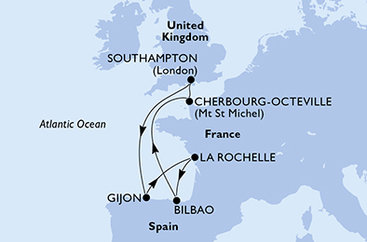
United Kingdom, Spain, France from Southampton aboard MSC Meraviglia
| Ship: | MSC Meraviglia |
|---|---|
| Route: | United Kingdom, Spain, France |
| Embarkation and disembarkation: | Southampton, United Kingdom |
| Duration: | 7 nights |
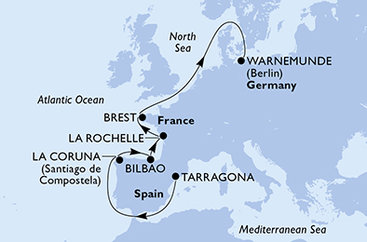
Spain, France, Germany from Tarragona aboard MSC Magnifica
| Ship: | MSC Magnifica |
|---|---|
| Route: | Spain, France, Germany |
| Embarkation: | Tarragona, Spain |
| Disembarkation: | Warnemünde, Germany |
| Duration: | 9 nights |