


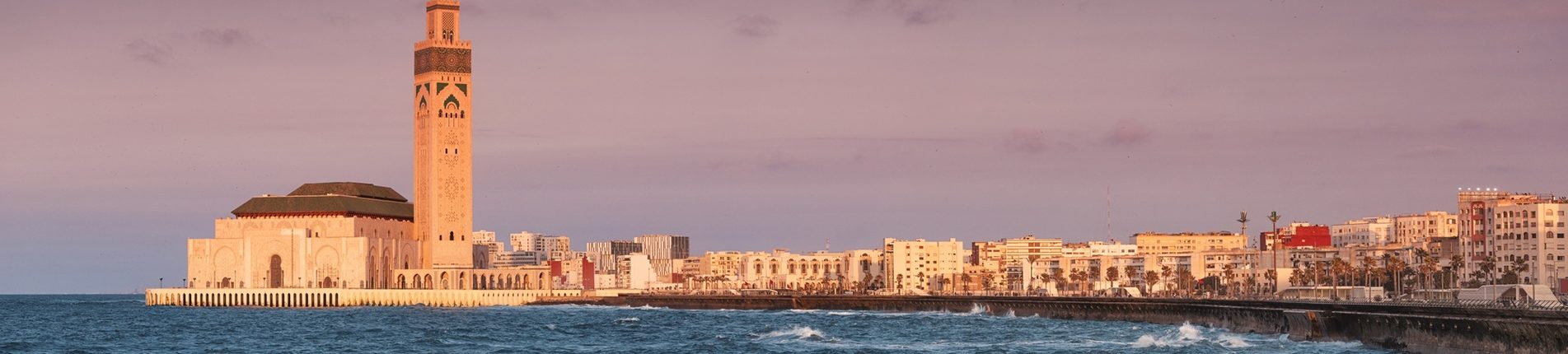
Casablanca / Morocco
Casablanca, the pulsating heart of Morocco on the shores of the Atlantic, draws you in with its energy and unique atmosphere. The modern face of the city is complemented by historic districts and lively streets full of cafes and markets. Casablanca offers a vibrant mix of traditions and contemporary lifestyle, reflected in its architecture, gastronomy, and everyday hustle and bustle. It is among the most cosmopolitan cities in Morocco, serving as its economic center and one of the most important ports in the Maghreb.
What to taste in Casablanca?
The local cuisine combines Arab, Berber, and French influences, offering a diverse palette of flavors.
- Tagine – a traditional slow-cooked dish prepared in a clay pot, often with chicken, lamb, or vegetables, and seasoned with aromatic spices
- Couscous – fluffy semolina served with meat and vegetables, typical for family gatherings
- Harira – a thick soup made from tomatoes, legumes, and herbs, especially popular during Ramadan
- Pastilla – an original sweet and savory pie filled with poultry, almonds, and cinnamon
- Fresh fish and seafood – thanks to its location by the Atlantic, these are among the most sought-after specialties
- Mint tea – a traditional sweet drink that symbolizes hospitality
Why you'll love Casablanca?
- Magnificent architecture by the ocean – the Hassan II Mosque is among Morocco's most impressive landmarks, creating an unforgettable scenery due to its location right by the Atlantic
- A city of contrasts and life – Casablanca combines traditional markets and the Habous district with modern boulevards full of cafes and a bustling atmosphere
- Cinematic atmosphere and coastal relaxation – the iconic Rick’s Café inspired by the film Casablanca adds a romantic touch to the city, while the Corniche promenade invites relaxation by the ocean
- The capital within reach – nearby Rabat offers elegant landmarks, a calmer atmosphere, and a pleasant contrast to bustling Casablanca
Practical tips:
- Official language: Arabic and Berber, with French commonly spoken and often English as well.
- Currency: Moroccan dirham (MAD).
- Opening hours: Shops are usually open from around 9:00 to 20:00, often with a lunch break. Monuments are generally accessible between 9:00 and 17:00. Restaurants serve lunch around noon and dinner usually from 19:00 to late evening hours.
- Public transport: The city has trams, buses, and taxi services. The modern tram network connects the main parts of Casablanca and is one of the most convenient ways of transportation.
- Weather: Casablanca has a mild oceanic climate with warm summers and pleasant winters. The main tourist season lasts from April to October, with temperatures around 22–28 °C.
The most interesting from Casablanca's history:
The history of Casablanca begins with the Berber settlement of Anfa, which was one of the significant ports on the Atlantic coast. In the 15th century, it was destroyed by the Portuguese, who built the Casa Branca fortress on its site, from which the name Casablanca was later derived. After their departure, the city lost its significance for a time and began to grow again in the 18th century when it became part of the Moroccan trade network. A significant transformation came at the beginning of the 20th century during the French protectorate, when the port city became a modern metropolis with new infrastructure and European-inspired buildings. Thanks to its strategic location by the Atlantic, Casablanca gradually developed into the country's economic center and in 1943 made history as the site of a significant Allied conference during World War II, confirming its international importance.
Useful information
Port map:
Places worth seeing:

Mešita Hassana II. je jednou z nejvýraznějších dominant Maroka a vyniká svou polohou částečně nad Atlantským oceánem a 200 metrů vysokým minaretem.

Mešita Hassana II. je jednou z nejvýraznějších dominant Maroka a její modlitební sál se částečně rozkládá nad Atlantským oceánem.

Interiér mešity Hassana II. vyniká bohatou výzdobou, tradičními mozaikami, dřevořezbami a mramorovými prvky.


Getting to the port:
Cruise ships dock at the Port of Casablanca - Casablanca Cruise Terminal, which is located near the city center. After disembarking, it is usually necessary to use a taxi or a shuttle bus, as pedestrian access is often limited. The center of Casablanca is approximately a 10–15 minute drive away, and you can reach the Hassan II Mosque in about 20 minutes. The port is modern and well-organized, ensuring a comfortable start to exploring this fascinating city.
Cruises from Casablanca:

Morocco, Spain, Portugal from Casablanca na lodi Explora II
| Ship: | Explora II |
|---|---|
| Route: | Morocco, Spain, Portugal |
| Embarkation: | Casablanca, Morocco |
| Disembarkation: | Lisbon, Portugal |
| Duration: | 8 nights |
Cruises to Casablanca:

Spain, Morocco, Italy from Barcelona na lodi MSC Magnifica
| Ship: | MSC Magnifica |
|---|---|
| Route: | Spain, Morocco, Italy |
| Embarkation: | Barcelona, Spain |
| Disembarkation: | Civitavecchia (Rome), Italy |
| Duration: | 7 nights |

Spain, Algeria, Morocco from Barcelona na lodi Explora V
| Ship: | Explora V |
|---|---|
| Route: | Spain, Algeria, Morocco |
| Embarkation: | Barcelona, Spain |
| Disembarkation: | Málaga, Spain |
| Duration: | 7 nights |
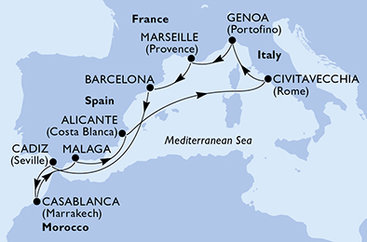
Italy, France, Spain, Morocco from Genoa na lodi MSC Magnifica
| Ship: | MSC Magnifica |
|---|---|
| Route: | Italy, France, Spain, Morocco |
| Embarkation and disembarkation: | Genoa, Italy |
| Duration: | 10 nights |