


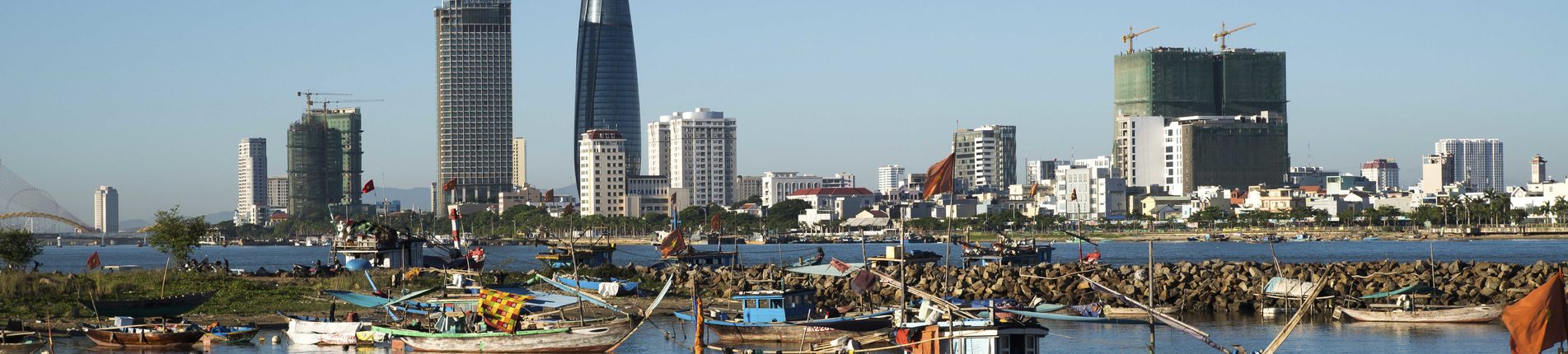
Chan May (Da Nang, Hue) / Vietnam
At the mouth of the Han River on the coast of the South China Sea lies Vietnam's third-largest city and important port, Da Nang.
The city's history dates back to 192 AD when the ancient Cham Kingdom was established. The first Europeans to arrive in the area were the Portuguese in 1535, who anchored in the then much more significant Hoi An. In the 17th and 18th centuries, French and Spanish trade and missionary ships joined the Portuguese, and in the 19th century, American ones followed. In the 1830s, Da Nang gained importance and soon became the most significant trading port in central Vietnam.
From the 1850s, France began to strengthen its influence in the area, and in 1887 French Indochina was established. Two years later, French colonizers renamed the city Tourane, and during the Vietnam War, Da Nang served as an important military airbase.
Da Nang is a mix of centuries-old Buddhist pagodas, colonial architecture, and modern buildings with beautiful sandy beaches. Religious buildings include the Buddhist Phap Lam Pagoda, the second-largest Cao Dai temple in Vietnam, or the Danang Cathedral, also known as the Rooster Church, built for the city's French residents as early as 1923. A visit to the unique Museum of Cham Sculpture, which exhibits around 300 sculptures and reliefs discovered in the city of My Son, is definitely worth it. A pleasant walk along the Han River and the 666-meter-long Dragon Bridge, the longest in Vietnam, is also recommended.
Among the most beautiful beaches is Non Nuoc to the south of the city, while to the north, you will find the long Khe, considered one of the most beautiful beaches in Vietnam.
Just a few kilometers south of Da Nang lie the Marble Mountains, limestone and marble rocks with forested cliffs offering stunning views. The caves in the cliffs were once inhabited by the Cham culture, and today you can see Buddhist shrines and temples from the 17th century here.
Da Nang is close to several significant UNESCO-listed sites. My Son is the former capital and religious center of the Cham Kingdom. Originally, there were about 70 temples and stupas from the 4th to the 14th century, but today, due to bombing during the Vietnam War, you can admire significantly fewer. In the former capital of the country, Hue, visitors can explore a fortified citadel with a royal palace from the early 19th century, and in Hoi An, a historic center with an exceptionally well-preserved trading port from the 15th to the 19th century awaits.
Before leaving Da Nang, try local specialties such as bun cha cha (noodle soup with fish balls) or canh ga chien mam (fried chicken wings in fish sauce).
Places worth seeing
Khe Beach – Relax on the beautiful long beach north of the city, popular with surfers, fishermen, water skiers, and divers.
Museum of Cham Sculpture – Visit the museum founded in 1915, which hosts around 300 sculptures and reliefs from the 4th to the 14th century, discovered in the capital of the Cham Kingdom, My Son.
Dragon Bridge – Take a walk along the Han River and stop at the 666-meter-long dragon-shaped bridge, which breathes fire and water every Saturday and Sunday evening.
Cao Dai Temple – Admire the second-largest Cao Dai temple in Vietnam, a religion founded in the 1920s.
Marble Mountains – Enjoy stunning views from the cliffs of limestone and marble rocks with 17th-century Buddhist shrines.
My Son – Be enchanted by the beautiful architecture of the former capital of the Cham Kingdom from the 4th to the 14th century.
Hue – Don't miss a tour of the fortified citadel with a royal palace from the early 19th century, listed as a UNESCO World Heritage Site.
Hoi An – Discover the fascinating history of the well-preserved Southeast Asian port with beautiful buildings from the 15th to the 19th century and a covered Japanese bridge.
Places worth seeing:

Pohled na město Da Nang, třetí největší město Vietnamu

Velká Buddhova socha (27 metrů) na vrcholu kopce s pohledem na Ba Na Hill

Ba Na Hill - středem Vietnamu se táhne divoké pohoří Truong Son, na jihu nazývané Annamské. V tomto pohoří se nachází Ba Na Hill, velké horské turistické středisko
Cruises to :

China, Vietnam from Hong Kong na lodi Spectrum of the Seas
| Ship: | Spectrum of the Seas |
|---|---|
| Route: | China, Vietnam |
| Embarkation and disembarkation: | Hong Kong, China |
| Duration: | 4 nights |
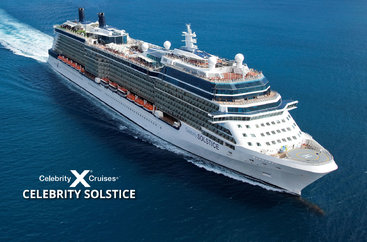
Singapore, Thailand, Vietnam, China from Singapore na lodi Celebrity Solstice
| Ship: | Celebrity Solstice |
|---|---|
| Route: | Singapore, Thailand, Vietnam, China |
| Embarkation: | Singapore, Singapore |
| Disembarkation: | Hong Kong, China |
| Duration: | 12 nights |