


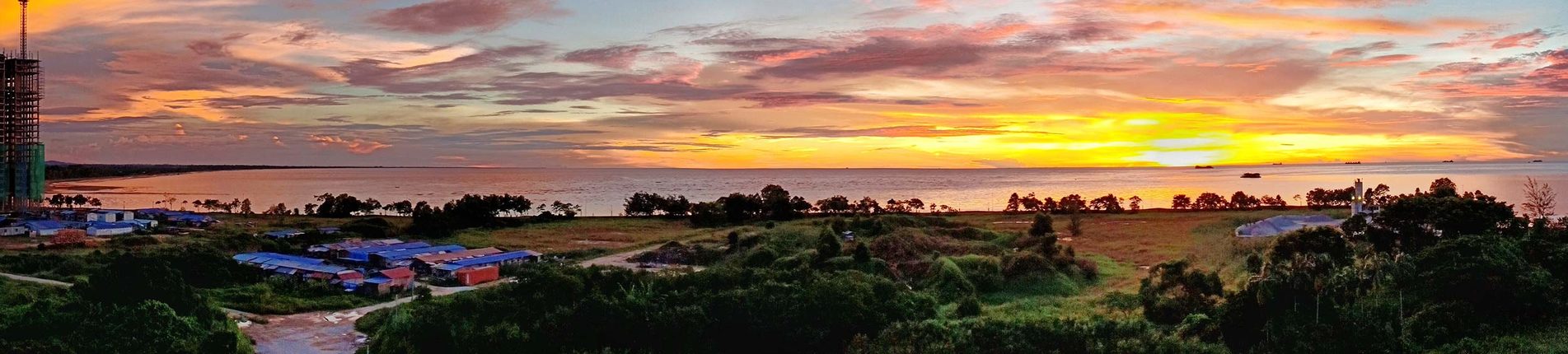
Bintulu (Borneo) / Malaysia
On the northern coast of the Malaysian part of the island of Borneo, Bintulu stretches along the shore of the South China Sea. The town, located near the mouth of the Kemena River in central Sarawak, has about 110,000 inhabitants.
In 1861, the then small fishing village was acquired by James Brooke, a British soldier and founder of the Kingdom of Sarawak on Borneo. A year later, he built a wooden fort here, known as Fort Keppel. During World War II, the area was occupied by the Japanese and heavily bombed by Allied forces. In 1969, oil and natural gas were discovered off the coast of Bintulu, and the region gained significance. Today, the town is the busiest port in Sarawak and a gateway to the region's important industrial area.
The first official meeting of Brooke's officials with the chiefs of local tribes is commemorated by the Council Negri clock tower, built in 1987 and standing on the site of a memorial stone from 1967. The beautiful Kuan Yin Tong temple is surrounded by a magnificent stone garden with an artificial waterfall, which is also boasted by the lovely Assayakirin mosque, set in a flower garden. The Tua Pek Kong temple, probably dating from the 1890s, was built to protect the town from evil spirits.
A pleasant walk along the 3-kilometer promenade along the coast and the sandy Tanjung Batu beach offers views of breathtaking sunsets. From the top of the Kidurong tower, it is possible to view the Bintulu oil platforms, which have their charm, especially after sunset. Those who want to get acquainted with the rainforest animals should visit the Tumbina park with a hornbill aviary, butterfly garden, and a small zoo.
On the banks of the Kemena River lies the fishing village of Jepak, where it is possible to observe the life and culture of the locals, who dry freshly caught fish, make belacan, the Malaysian version of shrimp paste, or starch from tropical palms.
About 30 kilometers northeast of Bintulu lies Similajau National Park with rock formations, dense rainforest, but above all, beautiful sandy beaches, some of which are nesting sites for green sea turtles. Other national parks within reach of the town include Lambir Hills with a beautiful waterfall, countless bird species, and numerous hiking trails, or Niah with its eponymous cave system, known for the discovery of 40,000-year-old human remains and the collection of bird nests, which are a local delicacy.
The Pasar Tamu and Pasar Utama markets are housed in buildings with typical conical roofs, symbolizing the traditional headgear of the indigenous Melanau people. Almost everything is available for purchase here - from fruits and vegetables to fresh fish and electronics.
A good place to taste local specialties is the night market: you can try nasi kandar, rice served with various types of curry, roti canai flatbread, or nasi lemak, rice cooked in coconut milk served with dried anchovies or sardines, peanuts, and curry.
Places worth seeing
Tua Pek Kong Temple – Admire the beautiful temple, built at the end of the 19th century to protect Bintulu from evil spirits.
Kidurong Tower – Don't miss the interesting night views of the South China Sea coast dotted with oil platforms.
Tanjung Batu Beach – Relax at the beautiful sandy beach near the city center during a stunning sunset.
Taman Tumbina – Get to know local animal species in the park with a hornbill aviary and butterfly garden.
Pasar Tamu, Pasar Utama – Shop with locals at bustling markets with roofs shaped like the traditional headgear of the indigenous people.
Jepak Village – In the small fishing village, glimpse into the lives of local people and see how shrimp paste or palm starch is made.
Similajau National Park – Explore the beautiful beaches of the small national park just beyond the borders of Bintulu, nesting sites for green sea turtles.
Places worth seeing:

Schody do chrámu v Bintulu
