


Nagasaki (Kyushu) / Japan
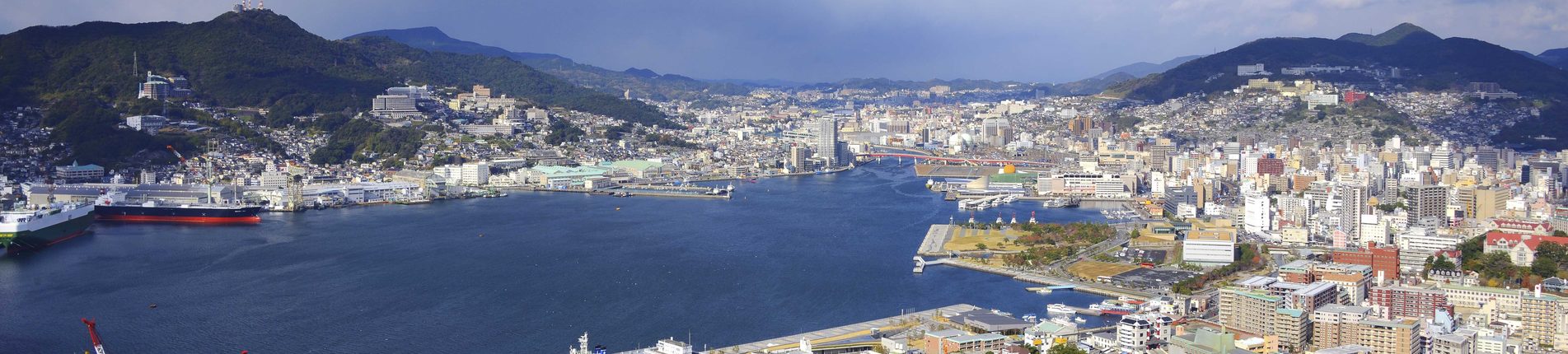
On the Japanese island of Kyushu, you will find Nagasaki, the capital and largest city of the province of the same name. Nagasaki is located on the coast of a long bay, which is the best natural harbor on the island. Expect a humid subtropical climate here, characterized by mild winters and long, hot, and humid summers.
Until the mid-16th century, when the Portuguese arrived, Nagasaki was just a small and insignificant fishing village. Soon after, trade flourished to such an extent that a port was built here in 1571. The village began to grow rapidly and soon transformed into a bustling port city, and the products that the Portuguese imported through it (tobacco, bread, textiles, or the Portuguese cake "castellas") soon became part of Japanese folk culture.
In 1663, Nagasaki was engulfed by a great fire, which claimed many significant buildings. After the Meiji reforms, Japan reopened to the world, and in 1859 the city became a free port.
Nagasaki has always been an important center of the Roman Catholic Church in Japan, but during the rule of Shogun Tokugawa Ieyasu, the religion was banned, and its followers were persecuted. At the end of the 19th century, when it was allowed again, the city regained its role.
Nagasaki was a significant industrial center, which is why during World War II, it became the target of the second and so far last atomic bomb in the world. On May 9, 1945, the US Air Force dropped a bomb with the code name "Fat Man" on the city, which immediately killed 35,000 people and leveled its entire northern part.
After the war, the city was rebuilt, but its architecture underwent significant changes. New temples and Christian churches were built, which were even proposed for UNESCO listing in 2007. Some remnants of the ruins from the nuclear attack were preserved as a memorial to the tragic event (the "one-legged" torii gate of the Sanno Shrine or the arch near the site where the atomic bomb exploded), while other structures were newly built as memorials (such as the Atomic Bomb Museum). If you are interested in World War II events, also visit the Peace Park with the Fountain of Peace and the remains of the almost completely destroyed Urakami Cathedral.
If you are a history enthusiast and want to look at events beyond World War II, don't miss a visit to Glover Garden with nine houses built in the Western style for foreign traders living in Japan at the end of the 19th and beginning of the 20th century, or a cruise to Hashima Island, a former coal mine abandoned in the 1970s.
When you are tired of history, take a break from it with a walk on Mount Inasa with beautiful views, in the beautiful Subtropical Botanical Garden, or in the interesting Penguin Aquarium.
Places worth seeing
Nagasaki Atomic Bomb Museum – Get acquainted with the events that led to its dropping on Nagasaki, the history of nuclear weapons, and the attack itself at the Atomic Bomb Museum.
Peace Park – Take a walk through the park established near the hypocenter of the atomic bomb explosion, see the remains of Urakami Cathedral and the Fountain of Peace.
Mount Inasa – Take a cable car to the 333-meter-high mountain with a huge observation platform and enjoy the beautiful views of the city or the sunrise or sunset.
Sanno Shrine – Stop for a moment at the "one-legged" torii gate, which, along with two camphor trees, remained from the shrine that stood here before the bomb attack.
Glover Garden – Visit the museum with nine Western-style houses from the late 19th and early 20th centuries and learn about the history of Japan's industrialization.
Hashima Island – Don't miss a cruise and tour of the island – a former huge coal mine inhabited by five thousand people – which was abandoned in the 1970s and even appeared in the Bond film Skyfall.
Nagasaki Penguin Aquarium – Have fun in the small but entertaining aquarium with seventy penguins of nine different species and other aquatic creatures.
Places worth seeing:

Hrad Šimabara leží v Šimabaře v prefektuře Nagasaki v Japonsku. Původní hrad byl postaven v roce 1624. Jeho dnešní podoba pochází z roku 1964. Pětiposchoďová, zářivě bílá budova je protikladem černého hradu Kumamoto v sousední prefektuře Kumamoto. Nagasaki, Japonsko

Most Meganebaši nebo Spectacles v Nagasaki, Japonsko

Pohled na japonské město Nagasaki
Cruises to Nagasaki:

China, Japan from Baoshan (Shanghai) na lodi Spectrum of the Seas
| Ship: | Spectrum of the Seas |
|---|---|
| Route: | China, Japan |
| Embarkation and disembarkation: | Baoshan (Shanghai), China |
| Duration: | 5 nights |
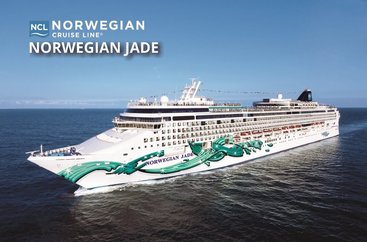
South Korea, Japan from Seoul na lodi Norwegian Jade
| Ship: | Norwegian Jade |
|---|---|
| Route: | South Korea, Japan |
| Embarkation: | Seoul, South Korea |
| Disembarkation: | Yokohama (Tokyo), Japan |
| Duration: | 9 nights |