


Surabaya (Java) / Indonesia
Surabaya is the capital of the East Java province and one of the first trading ports in all of Southeast Asia. You can find it on the northeastern coast of Java along the Madura Strait. With nearly 3 million inhabitants (and another 6 living in its suburbs), it is the second largest city in Indonesia after Jakarta.
The first mentions of Surabaya date back to the early 13th century, and in the 14th and 15th centuries, it is already mentioned as a port whose role was constantly growing and which benefited from its strategic location in the Brantas River delta and on the trade route between Melaka and the Spice Islands.
The Dutch took control of the city in 1743, and Surabaya soon became the largest city in the Dutch East Indies and a center of trade, industry, and the core of the Dutch plantation economy, even larger than the then Batavia (today's Jakarta), competing even with Shanghai or Hong Kong.
In 1942, the city was occupied by Japan, and after the end of World War II, it was seized by Indonesian nationalists who came into conflict with the British, who were in charge of the former Dutch colony. In the famous Battle of Surabaya, thousands of soldiers fell, and after it, the city, which is therefore called Kota Pahlawan, "the city of heroes," gained independence.
Today, Surabaya is one of the most important financial centers of the Indonesian archipelago, and its port Tanjung Perak is the second busiest port in Indonesia (right after Jakarta's Tanjung Priok), with sugar, tobacco, and coffee being among its most significant export goods.
Expect a tropical climate here with a rainy season (from November to June) and a dry season (from July to October) and a stable temperature range between 26 and 31 degrees.
The city's architecture is a colorful mix of colonial, Asian, Javanese, modern, and postmodern architecture. You can still find many old colonial buildings built between the 17th and early 20th centuries, such as the Majapahit Hotel or the old post office building. Many of these buildings are well-preserved and protected as cultural heritage. At the end of the 20th and the beginning of the 21st century, modern and postmodern buildings began to appear in the city, such as The Peak residence or One Icon, 200 meters high.
Once you have thoroughly explored the city, don't forget to get to know it from a culinary perspective as well. Surabaya is known for delicacies such as the dark beef soup Rawon or marinated cow's snout served with boiled vegetables and shrimp crackers, Rujak cingur. Don't miss the satay of clams, mussels, or rice cake.
Places worth seeing
Tugu Pahlawan – Check out the 41-meter-high symbol of the city, the heroes' monument, and the adjacent museum, commemorating those who fell in the fight for the country's independence.
Masjid Nasional Al-Akbar – Don't miss the largest Javanese mosque, climb its tower, and admire the city from a bird's eye view.
Sampoerna Museum – Get acquainted with the history of clove cigarettes (kretek) in the museum in a beautiful Dutch colonial building from 1864.
Kebun Binatang Surabaya – Visit the Surabaya Zoo, opened as early as 1916, which was the first in the world to successfully breed orangutans in captivity.
Kenjeran Beach – Relax on the only beach in the city with black sand and calm water and visit Sanggar Agung, a Chinese temple over the sea.
Monkasel – Enjoy the museum in a submarine that started its career in the 60s and ended it in the 80s of the last century and is now one of the city's biggest attractions.
Tanjungan Plaza – Indulge in shopping fever in the largest shopping center in the city, where you can buy everything you can think of.
Places worth seeing:

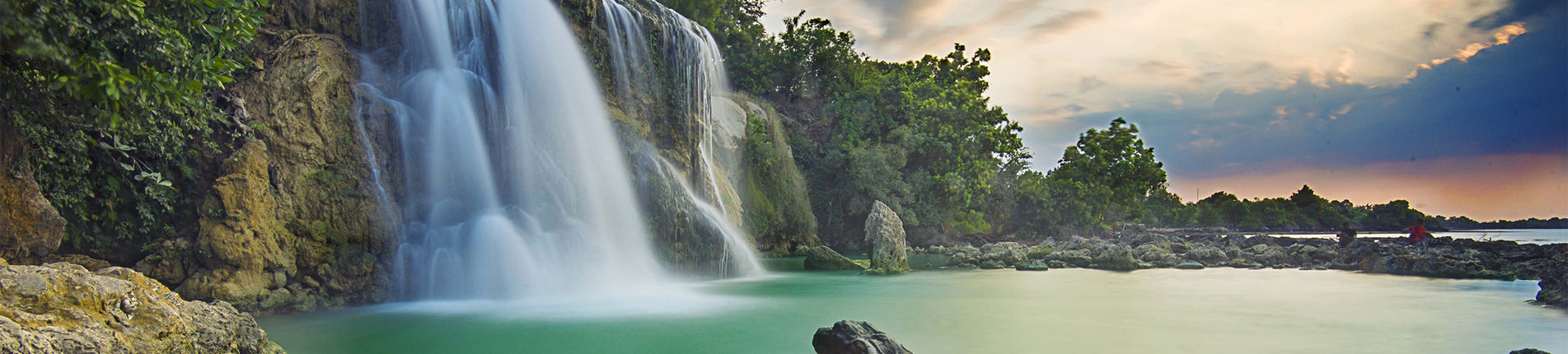
Vodopád ležící v Indonésii, Surabaya při západu slunce

Tugu Pahlawan – Prohlédněte si 41 metrů vysoký symbol města, památník hrdinů a přilehlé muzeum, připomínající padlé v boji za nezávislost země

Heroes Monument - národní památník v Surabaya, Indonésie
Cruises to Surabaya:
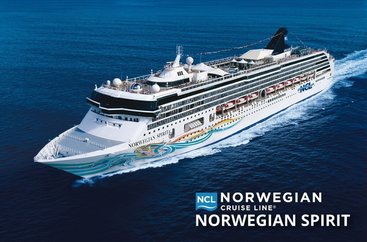
Singapore, Indonesia, Australia from Singapore na lodi Norwegian Spirit
| Ship: | Norwegian Spirit |
|---|---|
| Route: | Singapore, Indonesia, Australia |
| Embarkation: | Singapore, Singapore |
| Disembarkation: | Sydney, Australia |
| Duration: | 19 nights |