


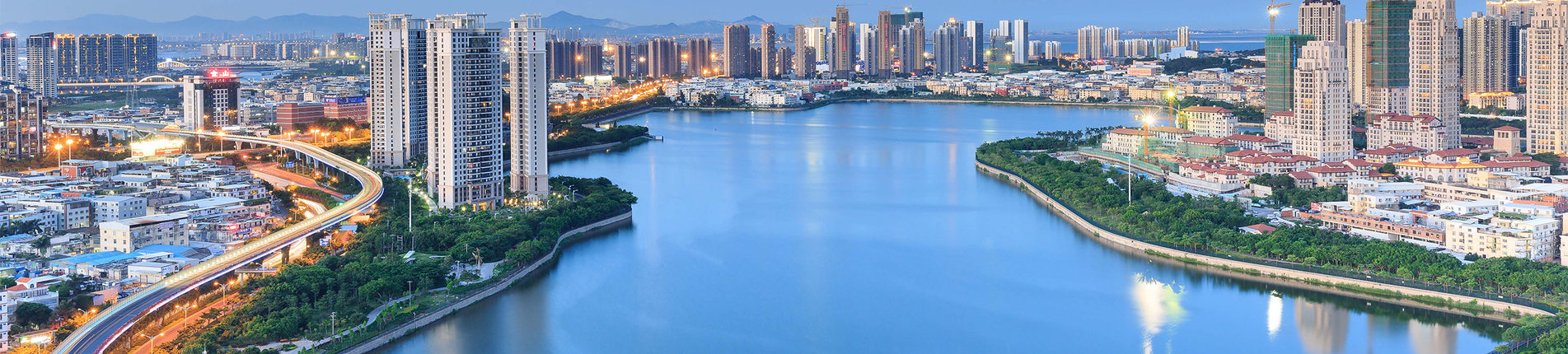
Xiamen / China
On the southeastern coast of China, on the shore of the strait connecting the East China Sea with the South China Sea and separating the country from Taiwan, lies Xiamen. The metropolis in Fujian province, spread across the mainland and two islands – Xiamen and Gulangyu, has over 5 million inhabitants.
The first settlement existed at the site of today's Xiamen as early as the first centuries AD. In 1387, a fortress was built here to protect against pirates, which gave the island, formerly known as Amoy, its current name. In 1541, the Portuguese arrived in the area, and between 1842 and 1912, the city was under British rule. At the beginning of this period, the port, considered one of the best natural harbors in the world at the time, opened to foreign trade, and in the early 1980s, it became one of several special zones accessible to foreign investments. Today, the city is known for its mild climate, interesting culture, and relatively low air pollution. It is no wonder that in recent years it has earned the status of one of the most livable cities in China.
Xiamen and the surrounding landscape are known for their beautiful scenery. The city center is located on the island of the same name with beautiful beaches, a long waterfront promenade, and interesting European architecture.
The Nanputuo Buddhist Temple dates back to the Qing dynasty and is one of the most significant in the entire province. This important pilgrimage site has been destroyed and rebuilt several times, and today visitors can admire beautiful religious architecture and a large lotus lake. Nature lovers should not miss a walk through the beautiful botanical garden on the slopes of the mountain, offering breathtaking views of the city.
South of Xiamen University is the beautiful sandy Baicheng Beach, above which rises the Hulishan Fortress from the late 19th century with fifty cannons from the 14th to the 20th century and an interesting historical exhibition. The expansive Xiamen Riyuegu Hot Spring Resort offers relaxation in dozens of hot pools with varying water temperatures, from which everyone can choose.
Just a 10-minute ferry ride from the main island lies Gulangyu. The islet was mainly inhabited by Europeans and Japanese in the past, and today it boasts winding streets lined with beautiful colonial villas from the Victorian era and stunning beaches, which are a frequent destination for day trips by locals and tourists. Culture enthusiasts can visit the Museum of Classical Art or the Piano Museum, adjacent to the classical Chinese Shuzhuang Garden on the coast. For the active, there is a climb to the top of Riguang Mountain, offering stunning sunsets.
Xiamen's gastronomy has been influenced by nearby Taiwan, and the region is famous throughout China mainly for its street food. A local specialty is worm jelly, a gelatin made from a special type of sea worm, and the ideal place to taste it is at the numerous stalls in Zeng Cuo An village on the southern coast of the island.
Places worth seeing
Nanputuo Temple – Be enchanted by one of the most significant Buddhist temples and pilgrimage sites in southeastern China.
Wanshi Botanical Garden – Take a walk through the beautiful botanical garden and admire the stunning views of the city from the top of the mountain.
Zhongshan Road Pedestrian Street – Don't miss the pedestrian street lined with countless shops, restaurants, and stalls with excellent street food, for which the region is famous throughout China.
Hulishan Cannon Fort – See a collection of more than 50 cannons from the Ming and Qing dynasties in the late 19th-century fortress.
Gulangyu Island – Spend a day on the island with beautiful beaches, winding streets with Victorian architecture, and interesting museums.
Xiamen Riyuegu Hot Spring Resort – Enjoy relaxation in the expansive resort with dozens of hot pools.
Zeng Cuo An Village – Taste worm jelly and other local specialties at stalls with excellent street food.
Places worth seeing:

Pohled na město Xiamen, Čína

Pohled na město Xiamen včetně hotelu Conrad, Čína
