


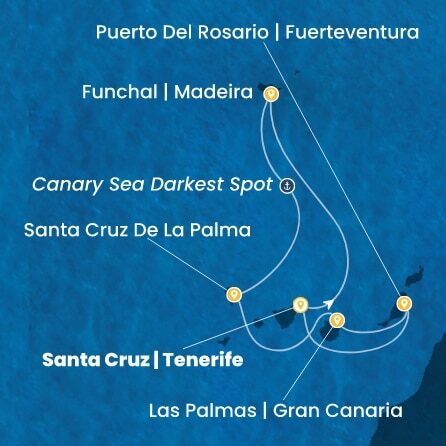


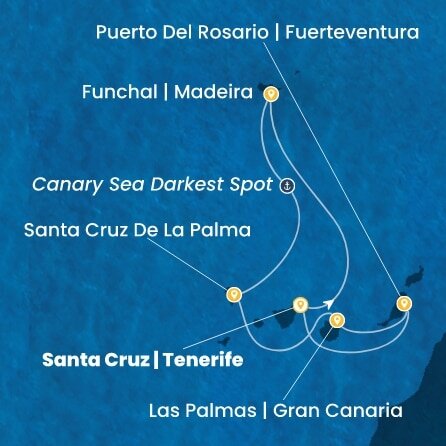

Route:
Company:
Ship:
od
€/os.
Itinerary
| DAY | Port / Program | ARRIVAL | DEPARTURE |
|---|---|---|---|
| 1. | 1. Santa Cruz de Tenerife (Tenerife) / Spain (embarkation) | --:-- | --:-- |
| 2. | 2. Santa Cruz de Tenerife (Tenerife) / Spain | --:-- | 20:00 |
| 3. | 3. Relaxing day at sea | --:-- | --:-- |
| 4. | 4. Funchal (Madeira) / Portugal | 07:00 | 17:00 |
| 4. | 4. The darkest spot in the Canary Sea / Spain | 23:30 | 23:59 |
| 5. | 5. Santa Cruz de La Palma (La Palma) / Spain | 09:00 | 18:00 |
| 6. | 6. Las Palmas (Gran Canaria) / Spain | 05:00 | 22:00 |
| 7. | 7. Fuerteventura / Spain | 08:00 | 18:00 |
| 8. | 8. Santa Cruz de Tenerife (Tenerife) / Spain (disembarkation) | 08:00 | --:-- |
In the destination
On board
-
day-by-day itinerary1. daySanta Cruz de Tenerife (Tenerife) / Spain (embarkation) / Island of Eternal Spring – this is how Tenerife, the largest and greenest of all the Canary Islands, is often referred to. Thanks to its diverse nature, beautiful sandy beaches, and volcanic landscape around the Pico de Teide volcano, which at 3,718 meters is the highest mountain in Spain, it is rightly called a paradise on earth. This popular holiday destination also offers valuable cultural monuments such as cathedrals, churches, and colonial houses in the main center of Santa Cruz or in the colonial town of La Laguna, which is listed as a UNESCO World Heritage Site.
-
day-by-day itinerary2. daySanta Cruz de Tenerife (Tenerife) / Spain / Island of Eternal Spring – this is how Tenerife, the largest and greenest of all the Canary Islands, is often referred to. Thanks to its diverse nature, beautiful sandy beaches, and volcanic landscape around the Pico de Teide volcano, which at 3,718 meters is the highest mountain in Spain, it is rightly called a paradise on earth. This popular holiday destination also offers valuable cultural monuments such as cathedrals, churches, and colonial houses in the main center of Santa Cruz or in the colonial town of La Laguna, which is listed as a UNESCO World Heritage Site.
-
day-by-day itinerary4. dayFunchal (Madeira) / Portugal / On the southern coast of the Portuguese island of Madeira, on the shores of the Atlantic Ocean, lies its main and largest city, Funchal. It was founded in the 15th century and has been a sought-after tourist destination since the 19th century. Among the most significant landmarks are the Sé Cathedral with its magnificent carved ceilings and the botanical garden with thousands of plant species and beautiful views of the city. The atmosphere of local life is complemented by the Mercado dos Lavradores market, offering a rich selection of fresh fruits, vegetables, and fish. Nature lovers are drawn to the mountainous landscape and the original Laurisilva laurel forest, listed as a UNESCO World Heritage site. Madeira is also renowned for its quality wines and traditional local specialties.
-
day-by-day itinerary4. dayThe darkest spot in the Canary Sea / Spain / It is night and the ship slows down, no visible land nearby, nor artificial lighting - this is where the sky is visible in all its intensity. Guests on the open deck receive headphones and a narrated journey among stars, planets, and constellations is projected on a giant LED screen. Subsequently, the sky itself becomes the star of the show, and through the Stellarium app, it is possible to recognize constellations and observe their appearance in real-time.
-
day-by-day itinerary5. daySanta Cruz de La Palma (La Palma) / Spain / The stunning architecture, interesting museums, and excellent gastronomy, that's Santa Cruz de la Palma. The main and second-largest city of the Canary Island La Palma is the gateway to the island's beautiful nature, often considered the most beautiful in the archipelago. Stroll along the lovely waterfront promenade and stop at Plaza de Espana square with Renaissance houses from the 15th and 16th centuries. Explore the fortresses built for defense against pirates and the exhibits of the Maritime Museum in a replica of Christopher Columbus's famous ship. Enjoy breathtaking views from the 17th-century pilgrimage church and from the peak of Roque de Los Muchachos, the highest point on the island. Head out for a walk on one of the black volcanic beaches or for a proper trek through the volcanic peaks of the Caldera de Taburiente National Park.
-
day-by-day itinerary6. dayLas Palmas (Gran Canaria) / Spain / The third largest Canary Island, Gran Canaria, stands out for its beauty, wealth of archaeological sites, and diversity of nature. This volcanic island has earned the nickname "mini-continent" due to its varying microclimates, allowing you to experience all four seasons in a single day. You can also visit places reminiscent of the landscapes of America, Europe, and Africa. The island is truly captivating with the beauty and length of its golden beaches, the enchanting atmosphere of small villages rich in history, and the lush green ravines between the cliffs. Worth mentioning is the capital city, Las Palmas, with its historic district of Vegueta or the house of the explorer Christopher Columbus.
-
day-by-day itinerary7. dayFuerteventura / Spain / Fuerteventura is a sunny Canary Island known for its endless beaches and crystal-clear waters. The second largest island of the Canary Islands offers not only relaxation by the sea but also opportunities for water sports, from surfing to diving. Thanks to its dry and sunny climate, it is ideal for walks in nature reserves, where volcanic landscapes, sand dunes, and unique flora and fauna can be discovered. The capital, Puerto del Rosario, offers a picturesque harbor, local culture, and a lively atmosphere typical of the Canaries. Fuerteventura enchants with its simple beauty, long beaches, and a combination of relaxation with active exploration.
-
day-by-day itinerary8. daySanta Cruz de Tenerife (Tenerife) / Spain (disembarkation) / Island of Eternal Spring – this is how Tenerife, the largest and greenest of all the Canary Islands, is often referred to. Thanks to its diverse nature, beautiful sandy beaches, and volcanic landscape around the Pico de Teide volcano, which at 3,718 meters is the highest mountain in Spain, it is rightly called a paradise on earth. This popular holiday destination also offers valuable cultural monuments such as cathedrals, churches, and colonial houses in the main center of Santa Cruz or in the colonial town of La Laguna, which is listed as a UNESCO World Heritage Site.